


Sustainable Garden Room Construction Done Well
- Mark Moody
- May 4
- 6 min read
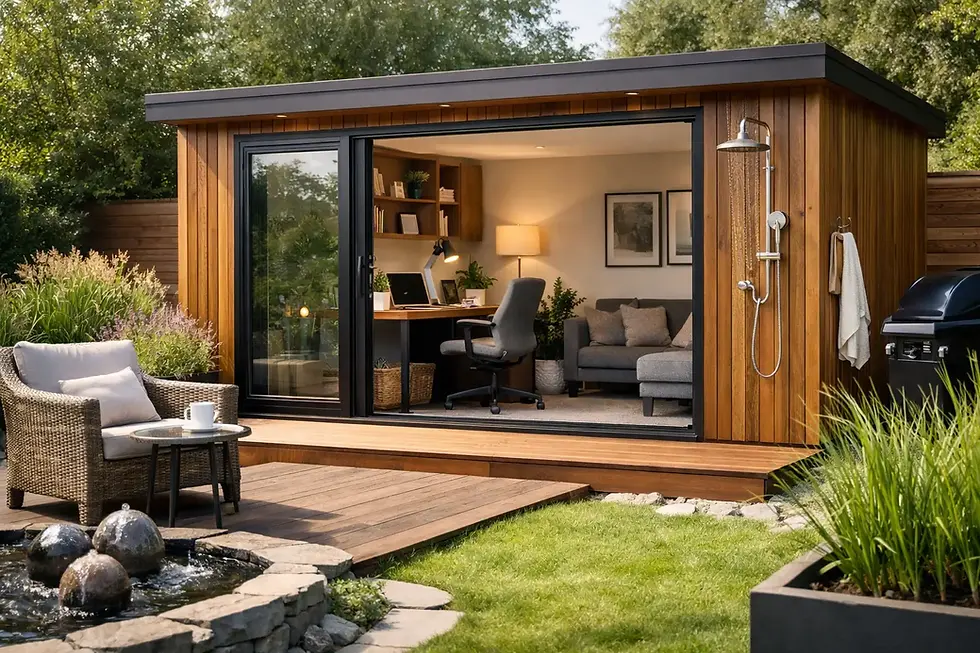
A garden room should feel like a natural extension of your home, not a compromise hidden at the bottom of the garden. When clients ask about sustainable garden room construction, they are usually looking for more than a greener materials list. They want a space that performs well in winter, stays comfortable in summer, lasts for years, and still looks considered in the setting around it.
That is the real test. Sustainability is not one decision made at the end of a project. It runs through the design, the structure, the insulation, the specification, the installation process and the way the surrounding garden is treated once the build is complete.
What sustainable garden room construction really means
There is a tendency to reduce sustainability to a few familiar talking points - timber cladding, recycled materials, perhaps a sedum roof. Those can all play a part, but on their own they do not guarantee a genuinely responsible build.
A sustainable garden room needs to work hard on several levels. It should use materials sensibly, minimise waste, deliver strong thermal performance, and avoid short-term decisions that lead to repairs or replacement far earlier than expected. Durability matters just as much as provenance. A room that needs major remedial work in a few years is rarely the sustainable option, however good the brochure looked at the start.
For homeowners, this means thinking beyond appearances. A beautifully finished office, gym or cinema room still needs a well-engineered shell, carefully considered detailing and a build method suited to year-round use. For developers and housebuilders, it also means paying close attention to performance data, fabric efficiency and compliance-related considerations.
Why the structure matters as much as the finish
One of the clearest differences between a premium garden room and a cheaper alternative is what sits behind the visible surfaces. The structure determines thermal efficiency, longevity and day-to-day comfort, yet it is often where low-cost builds cut corners.
In sustainable garden room construction, insulated structural systems such as SIP panels can offer a strong balance of efficiency and performance. Because SIPs combine structural strength with high levels of insulation, they can help create a more thermally stable building envelope with less wasted space in the wall build-up. That matters in a garden room, where every square metre counts.
The benefit is not purely technical. Better-performing walls and roofs make the room more pleasant to use. If the space is intended as a home office, poor thermal performance quickly becomes frustrating. If it is a gym, temperature swings and condensation can become a real issue. If it is a cinema room or lifestyle retreat, acoustic and thermal comfort both shape the experience.
That said, no single system is automatically the right answer for every project. Site access, design intent, budget and intended use all influence the best construction approach. Good sustainable design is not about forcing the same solution onto every garden. It is about choosing a build method that suits the brief and executing it properly.
Designing for lower energy use from the outset
The most effective way to improve sustainability is to make better decisions before the build begins. Orientation, glazing placement, shading and ventilation all have a direct effect on how the room performs.
A south-facing room with large areas of glass might sound appealing, but too much solar gain can make it uncomfortable in warmer months unless shading and ventilation are carefully built into the design. Equally, a room with very limited glazing may retain heat well but feel darker and less inviting than the client expected. The right balance depends on how the space will be used and at what time of day.
This is where bespoke design becomes particularly valuable. A made-to-measure solution allows the building to respond to the garden, the main house and the client’s priorities. A garden office may need controlled natural light to reduce screen glare. A studio may benefit from larger glazed openings. A multifunctional family space might need flexibility above all else.
Sustainability improves when the design is specific. Standardised buildings can work in some situations, but a room tailored to the site is more likely to avoid overheating, reduce artificial lighting demands and make efficient use of materials.
Materials that balance performance and longevity
Material selection often starts with visual appeal, and that is understandable. External finishes need to sit well within the garden and complement the property. But in sustainable garden room construction, materials should also be judged by maintenance requirements, lifespan and suitability for the local environment.
Timber remains a popular choice, particularly when it is responsibly sourced and properly detailed. It offers warmth, character and a natural relationship with the garden. However, not all timber specifications are equal. Species, treatment, fixing methods and weather exposure all affect how well it will perform over time.
Cladding, roofing, windows and doors must be considered together rather than as separate cosmetic choices. A high-quality envelope reduces drafts, moisture risks and heat loss. Well-made doors and glazing are especially important in garden rooms because these buildings often include more glass than a typical domestic extension.
The sustainable choice is not always the cheapest up front. In many cases, spending more on better materials reduces maintenance, preserves performance and extends the life of the building. Over the long term, that is usually the more responsible route.
Site work, waste and respecting the garden
A garden room project should improve the way a property functions without leaving the outdoor space feeling compromised. Responsible construction includes how the site is managed during the build and how the area is restored afterwards.
Ground preparation, access routes and foundation choices all affect the garden. In some settings, minimising excavation may help preserve existing landscaping and reduce disruption. In others, the practical requirements of the site may call for more substantial works. There is rarely a one-size-fits-all answer, which is why early planning matters.
Waste management is another part of the picture. Accurate design, measured material ordering and an experienced installation team can all help reduce unnecessary waste. Prefabricated or precision-manufactured systems can support this if they are integrated properly into the project. Just as importantly, a tidy, well-managed site tends to result in fewer mistakes and a smoother experience for the client.
Landscaping should not be treated as an afterthought. Reinstating planting, paths and surrounding finishes helps the new room settle naturally into the garden. It also prevents the project from feeling like a standalone object that has been dropped into place without consideration for the wider setting.
Comfort through every season
A sustainable garden room is one that gets used consistently. If it is freezing in January or stifling in July, it will spend more time empty than occupied, which is hardly an efficient use of materials or budget.
Year-round comfort comes from a combination of insulation, airtightness, ventilation and heating strategy. Electric panel heaters may suit some rooms, while underfloor heating may be more appropriate in others. The right choice depends on room size, occupancy patterns and how quickly the space needs to warm up.
Ventilation deserves just as much attention as heating. Airtight construction improves efficiency, but stale air and trapped moisture can cause problems if fresh air is not properly managed. In practical terms, this means designing for controlled ventilation rather than assuming an open window will solve everything.
Clients often notice the quality of a build in these quieter details. The room feels settled. Temperatures remain stable. The space is ready to use without constant adjustment.
Sustainable value is about the whole lifespan
The most convincing argument for sustainable garden room construction is not abstract. It is visible in how a building performs over time. A well-designed, carefully built garden room can add genuine flexibility to a property while avoiding the cycle of patch repairs, excessive heating costs and premature upgrades.
For some homeowners, the priority is creating a calm, insulated place to work a few steps from the house. For others, it is a private gym, a cinema room or a retreat that makes better use of the plot they already own. In each case, the value of the project comes from combining craftsmanship with sound construction decisions.
At Unique Garden Retreats, that is why the process matters as much as the finished room. Thoughtful design, clear planning, strong technical knowledge and careful installation all contribute to a result that feels considered from the start.
If you are planning a garden room, the most sustainable choice is often the one that solves the brief properly the first time - with durable materials, proven performance and enough care for the surrounding garden that the new space looks as though it always belonged there.


Comments