


Bespoke Garden Rooms Oxfordshire Homes Love
- Mark Moody
- Mar 23
- 6 min read
Space at home tends to disappear gradually. First it is the spare room becoming an office, then the dining table turning into a desk, then the garage filling with everything except the thing you meant to use it for. That is why bespoke garden rooms Oxfordshire homeowners invest in are not simply an upgrade to the garden - they are a practical way to create proper, usable space without compromising the house itself.
A well-designed garden room can solve a specific problem and improve how your home works day to day. It can give you a quiet place to work, train, host family film nights, run a business or simply step away from a busy household. The difference lies in whether that space is designed around your life, or whether you end up adapting your life to fit a standard unit.
Why bespoke garden rooms in Oxfordshire make more sense
Oxfordshire homes vary enormously. A compact town garden in Oxford places different demands on a build than a larger plot in Witney, Bicester or the villages surrounding Banbury and Abingdon. Rooflines, access, neighbouring properties, trees, levels and planning considerations all shape what is possible.
That is where a bespoke approach earns its place. Rather than starting with a fixed box and asking you to choose from a narrow set of finishes, a tailored garden room starts with how you want to use it and what your site can realistically support. Size, layout, glazing, storage, lighting and interior finishes are considered together so the final building feels intentional, not improvised.
This matters for visual reasons, but also for practical ones. A home office needs different acoustics, cabling and desk positioning than a garden gym. A cinema room requires careful thought around light control and insulation. A family retreat might need wider doors, more natural light and flexible storage so it can change with the seasons.
What a truly bespoke garden room should include
Not all custom builds are equally custom. Some providers offer a standard shell with a handful of cosmetic options. A genuinely bespoke service goes much further and should cover both the creative and technical decisions that affect how the room performs over time.
The design stage is where the project either becomes straightforward or starts to drift. Good consultation should cover how you will use the room, how often, at what times of day and by how many people. Orientation matters. Morning glare on a computer screen, overheating in summer or poor access in wet weather can all undermine an otherwise attractive design.
3D modelling can be especially helpful here because it gives a clearer sense of scale and proportion before work begins. It helps homeowners make confident decisions about cladding, glazing, roof style and internal layout, and it reduces the risk of expensive changes later.
The construction method matters just as much. SIP panels, for example, are often chosen for their thermal performance, structural strength and consistent build quality. In a garden room that is meant to be used throughout the year, that is not a technical footnote - it affects comfort, running costs and how solid the building feels on a cold January morning.
Interior finishing is another area where bespoke projects stand apart. The room should feel complete when it is handed over, not like a shell waiting for another round of contractors. Flooring, lighting, sockets, heating, decoration and fitted features all contribute to whether the space is ready to use from day one.
Choosing the right type of bespoke garden room Oxfordshire properties need
The best garden rooms are designed around real habits rather than broad labels. Plenty of clients start by asking for an office and end up needing a multi-use room that also handles meetings, storage and occasional guest space.
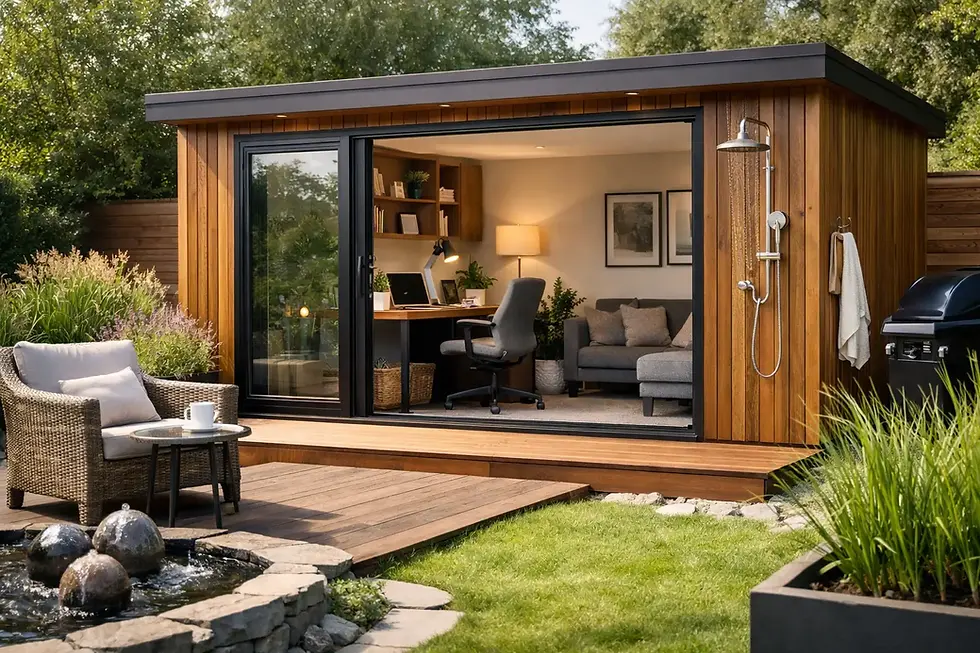
A garden office remains one of the most popular choices because it creates a genuine separation between work and home. That separation is valuable. You can close the door at the end of the day, leave the laptop behind and reclaim the house for family life. To work properly, though, the room needs reliable insulation, strong electrics, dependable connectivity and enough natural light without creating screen glare.
A gym has a different set of priorities. Floor strength, ventilation and room proportions matter more than decorative extras. You may want mirrored walls, reinforced areas for heavier equipment or acoustic measures if impact noise is a concern. If the room will be used early in the morning or late in the evening, privacy and lighting become more important too.
Cinema and entertainment rooms demand another level of planning. Large expanses of glass might look impressive in a brochure, but they are not always the right choice if you want an immersive viewing space. In those cases, a more controlled layout with layered lighting, enhanced insulation and a tailored media wall often produces a far better result.
Then there are flexible retreat spaces - the kind that start as a studio, reading room or entertaining area and evolve over time. These are often the smartest investment because they allow the building to adapt with changing family needs. A room that works today as a hobby space may become a teenage den, a treatment room or a quiet spot for visiting relatives later on.
The planning and build process should feel managed, not mysterious
One of the main concerns homeowners have is not the garden room itself. It is everything around it - planning, access, timelines, disruption and whether the finished result will justify the investment.
A full-service approach removes a great deal of that stress. It means having support from first consultation through design, planning guidance, installation, final finishes and the restoration of the surrounding garden. That last part is often overlooked, but it matters. A beautiful building loses some of its impact if the landscaping around it feels disturbed or unfinished.
In Oxfordshire, site access can vary from simple side entries to narrow routes and more complex garden layouts. These details affect logistics, foundation strategy and installation planning. It is far better to address them early than to discover limitations once materials arrive.
Planning is another area where experience counts. Many garden rooms fall within permitted development, but not all do. Factors such as height, position, use and local constraints can change what is required. Clear advice at the outset helps avoid delays and gives homeowners confidence that the project is being handled properly.
Build quality is what you notice later
The visual appeal of a garden room is obvious from the start. What homeowners tend to notice months and years later is the quality you cannot always see in the first ten minutes.
That means insulation that keeps the room comfortable in every season, doors and windows that continue to operate smoothly, finishes that wear well, and a structure that feels secure and stable. Premium materials and sound construction are not about specification for its own sake. They protect the long-term value of the investment and make the room genuinely pleasant to use.
Sustainability also comes into this conversation. Many clients want a building that performs efficiently and uses materials responsibly. That is a sensible priority, not a passing trend. Better thermal performance reduces energy use, and durable materials generally mean fewer repairs and replacements over time.
For housebuilders and developers, the technical side becomes even more important. Knowledge around SIP systems, structural performance and SAP-related considerations can support wider project goals where compliance and energy performance need to be carefully managed.
What to look for in a garden room company
If you are comparing providers, it helps to look beyond headline price. A cheaper quote can become expensive if it excludes interior works, planning support, groundwork or garden reinstatement.
Look for a company that asks thoughtful questions early on and speaks clearly about process, materials and likely trade-offs. Some designs prioritise glass and appearance, while others lean towards privacy and thermal efficiency. Neither is automatically right. The best solution depends on how you will live in the space.
It is also worth paying attention to whether the company can take ownership of the whole project. A joined-up service usually means fewer delays, fewer handover issues and a more consistent finish. For many homeowners, that reassurance is just as valuable as the design itself.
At Unique Garden Retreats, that complete approach is central - from initial ideas and 3D design through to installation, interior finishing and landscaping that brings the garden back together around the new room.
A bespoke garden room should feel like it belongs to your home, your routine and your future plans. If it is designed properly, it does more than add square footage. It gives you back space that works exactly as it should, every day.


Comments