


Garden Room or Loft Conversion?
- Mark Moody
- May 18
- 6 min read
When you need more space, the question is rarely whether your home could use it. The real question is where that space should go. For many homeowners, it comes down to a garden room or loft conversion - two very different ways to create extra room without moving house.
Both can add value, improve daily life and make your property work harder. But they solve different problems. One gives you a separate, purpose-built space in the garden. The other reshapes the house you already have. The right choice depends on how you live now, how you want to use the new room, and how much disruption you are willing to accept along the way.
Garden room or loft conversion - what are you really buying?
A loft conversion is usually about reclaiming space that already exists. If your roof structure and head height allow it, that unused area above the ceiling can become a bedroom, study or en suite. It keeps everything under one roof, which suits growing families and homes where every internal square metre matters.
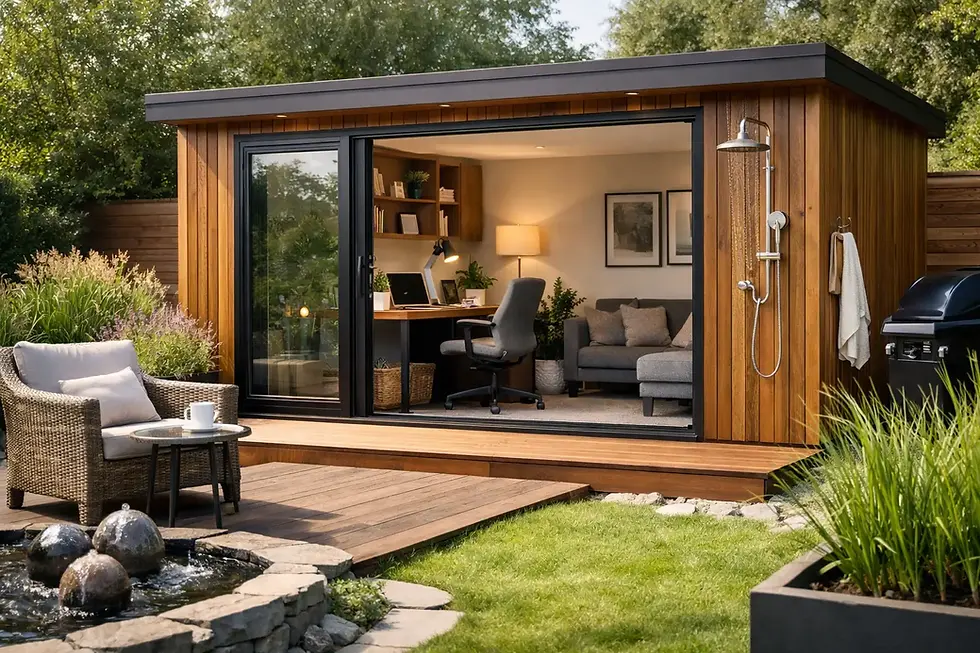
A garden room is different. It creates a separate building with a distinct purpose. That independence is often the biggest advantage. If you want a home office that feels apart from the house, a gym where equipment can stay set up, or a cinema room that does not compete with family life indoors, a bespoke garden room often feels like a better fit from day one.
This is why the decision should not start with square footage alone. It should start with use. Extra space is only valuable if it genuinely improves the way you live.
Which option suits the way you live?
If your main goal is another bedroom, especially for a teenager, guest suite or growing family, a loft conversion often makes practical sense. It keeps the room connected to the rest of the house, close to bathrooms and part of the normal flow of family life.
If your main goal is separation, a garden room usually comes into its own. Working from the kitchen table is one thing. Running meetings from a quiet, insulated office a short walk from the back door is another. The same applies to hobbies, fitness and entertainment. A dedicated building allows that use to happen properly, without having to pack everything away at the end of the day.
There is also the question of flexibility. A well-designed garden room can start as an office, then become a studio, treatment room, games room or guest space later on. That adaptability appeals to homeowners who want a long-term investment rather than a single-use room.
Cost is important, but value matters more
People often look at a garden room or loft conversion through the lens of headline cost, but direct price comparisons can be misleading. Loft conversions vary widely depending on structure, access, roof type, dormers, steelwork, insulation and internal alterations. Once you add a staircase, electrics, plumbing and decoration, the total can climb quickly.
Garden rooms also have a broad price range, particularly when they are bespoke rather than off-the-shelf. Size, glazing, foundations, internal finishes, heating, lighting and landscaping all shape the final figure. But the benefit is clarity. Because the building is designed from scratch for a defined use, it is often easier to control the brief and specify exactly what matters to you.
Value comes from how well the space performs over time. A cheaper room that is too hot in summer, too cold in winter or awkward to use is not really good value. The build quality, insulation standard and attention to detail matter more than the lowest initial quote.
Planning, permissions and practical constraints
Planning is one area where assumptions can cause problems. Many garden rooms can be built under permitted development, but not all. Height, position, use and proximity to boundaries can all affect what is allowed. If the building is intended for sleeping accommodation or includes plumbing-heavy layouts, the rules may shift further.
Loft conversions can also fall under permitted development in some cases, but again, it depends. Roof alterations, dormers facing certain elevations, conservation areas and structural changes may all require approval. Building regulations are of course a separate matter, and they are significant for both options.
The practical constraints are just as important as the paperwork. A loft conversion depends on the existing roof being suitable. Low head height, awkward trusses or limited room for a staircase can reduce viability or make the finished space feel compromised. A garden room depends on having enough outdoor space to build something useful while still keeping the garden enjoyable.
This is where early design input makes a real difference. It is far better to understand limitations before you commit than to discover halfway through that the room will be smaller, darker or more complex than expected.
Disruption during the build
One of the biggest differences between the two options is how they affect everyday life while work is taking place.
A loft conversion happens inside your home. Even with a careful build programme, there is usually noise, dust and regular contractor access through the house. If structural work is extensive or ceilings need to be opened up, the disruption becomes hard to ignore. For some households, that is manageable. For others, especially where people work from home or have young children, it can be a deciding factor.
A garden room is generally less intrusive. Most of the work takes place outside, with the main impact focused on access through the garden and some temporary disturbance around the site. That separation makes the process feel easier for many homeowners.
A full-service approach helps here. Good planning, clear communication and careful site management reduce stress regardless of build type, but they are particularly valuable when you want the project to fit around daily life rather than take it over.
Comfort, performance and year-round use
Not all extra rooms perform equally well. This is especially important if the space will be used every day rather than occasionally.
A loft conversion can feel like a natural extension of the house, but its comfort depends heavily on insulation, ventilation and the quality of the conversion itself. Poorly handled, loft rooms can suffer from overheating in summer and heat loss in winter.
A high-quality garden room should be designed for year-round use from the outset. That means proper insulation, strong structural build-up, efficient glazing and reliable heating - not just a timber shell at the end of the lawn. Construction methods matter here. Systems such as SIP panels are often valued because they support excellent thermal performance and structural integrity within a slim wall build-up, helping the room stay efficient without sacrificing internal space.
For clients who care about finish as much as function, the details matter too. Lighting, acoustic comfort, storage, flooring and the way the building sits within the garden all shape whether the room feels like an afterthought or a genuine extension of the home.
The impact on your property
A loft conversion can increase bedroom count, which may have a clear effect on resale appeal. In family-oriented locations, that can be a strong advantage.
A garden room adds value in a different way. It strengthens lifestyle appeal. Buyers increasingly recognise the benefit of a dedicated office, studio or wellness space, especially when it is well designed and integrated into the garden rather than dropped into it as a basic outbuilding.
There is also a visual consideration. Loft conversions alter the roofline and interior layout of the house. Garden rooms change the way the outdoor space is used. Neither is automatically better. It depends on whether you value preserving garden area or preserving the internal structure of the home.
The best projects take the wider property into account. A bespoke garden room, thoughtfully positioned and paired with landscaping that restores the surrounding space, can feel like a natural part of the setting rather than a compromise.
So, should you choose a garden room or loft conversion?
Choose a loft conversion if you need integrated living space inside the house, especially an extra bedroom, and your roof structure makes the project viable without too many compromises.
Choose a garden room if you want a separate, high-performing space with a clear purpose - somewhere to work, train, create or switch off without blurring the boundaries of home life.
For many Oxfordshire homeowners, the deciding factor is not just budget. It is quality of use. A room that supports your routine every day will always feel like the better investment than one that simply adds square metres on paper. That is why bespoke design matters. At Unique Garden Retreats, the aim is not just to build another room, but to create a space that earns its place in your home and your life.
Before you choose, picture an ordinary Tuesday rather than a property brochure. Think about where you would actually work best, relax properly or make room for family life to grow. The right answer usually becomes much clearer there.


Comments