


8 Garden Office Layout Examples That Work
- Mark Moody
- May 14
- 6 min read
The difference between a garden office that feels calm and productive and one that feels cramped usually comes down to layout. When homeowners ask for garden office layout examples, they are rarely looking for a trendy floor plan in isolation. They want to know how the room will actually work on a Monday morning, during back-to-back calls, in winter light, and as their routine changes over time.
That is why layout should be considered early, not after the shell has been designed. A well-planned garden office needs to respond to how you work, how much privacy you need, where natural light falls, and whether the room may later need to serve a second purpose. In a bespoke build, those decisions can be designed in from the start rather than forced in afterwards.
Why layout matters more than square metre count
A larger room is not always a better office. In many cases, a compact garden room with the right desk position, storage wall and circulation space will feel more comfortable than a bigger one arranged without much thought. Good layout supports focus, keeps cable clutter under control and allows heating, lighting and glazing to work with the room rather than against it.
The practical details matter. Door placement affects usable wall space. Window height changes where a desk can sit. Built-in joinery can remove the need for freestanding furniture that eats into the floor area. Even the shape of the room can influence whether it feels like a professional workspace or a spare room that happens to contain a laptop.
Garden office layout examples for different ways of working
1. The classic front-facing desk layout
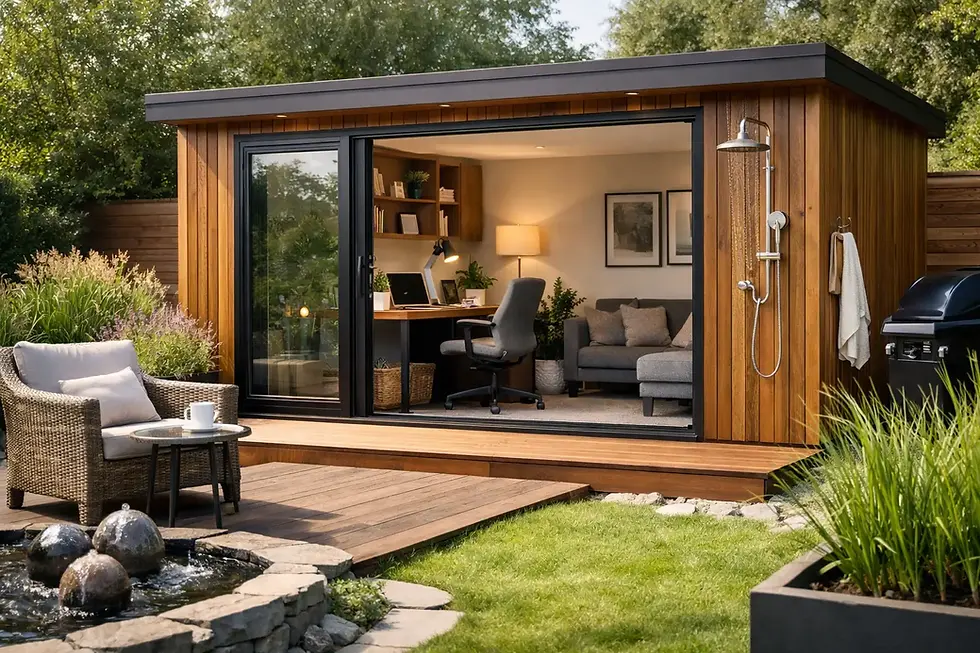
This is one of the most popular garden office layout examples because it is simple and effective. The desk sits facing the garden, usually positioned to benefit from glazing at the front elevation. Storage runs along one side or the rear wall, leaving the centre of the room open.
It works particularly well for solo professionals who want a strong visual connection with the outdoors. Looking out across the garden can make the office feel more spacious, and it often creates a pleasant backdrop for video calls if the desk is angled carefully. The trade-off is glare. If the room gets strong direct sun, shading, glazing specification and desk orientation need proper thought.
2. The side-lit workstation
In this arrangement, the desk is set against a solid wall or slightly away from it, with light coming from side windows rather than directly in front. For many people, this creates a more controlled working environment. Screen visibility is easier to manage, and the main glazed elevation can be kept clear for seating, planting views or access.
This layout suits clients who spend long periods at a monitor and want fewer distractions. It also allows for a cleaner, more professional background behind the desk. If you regularly take calls, this can be a smarter option than sitting directly in front of full-height glazing.
3. The L-shaped office for compact rooms
An L-shaped desk layout is often the best answer in smaller garden offices. It uses two walls efficiently and creates distinct zones without needing partitions. One side can hold the main workstation, while the return can be used for paperwork, a printer, samples or a second screen setup.
The benefit here is usability. Even in a modest footprint, the room feels organised. It can also make custom joinery more worthwhile, because every centimetre works harder. The main thing to get right is circulation. If the desk projects too far into the room, the space can quickly feel pinched.
4. The dual workstation layout
For households where two people work from home, the layout needs more than two desks squeezed into one room. A good dual workstation plan creates a sense of separation, whether through opposing desks, a shared built-in bench, or zoning with storage between work areas.
This is one of the garden office layout examples where acoustic comfort becomes just as important as floor space. If both users are on calls, desk orientation, soft finishes and wall treatments all make a difference. In some cases, a slightly larger room with integrated storage is better value than a tighter layout that looks efficient on paper but feels frustrating in daily use.
5. The office with a meeting corner
Not every garden office is used purely for individual desk work. Some clients want space for client meetings, reading, planning sessions or simply a quieter place to think away from the house. In those cases, a layout with a dedicated meeting corner can work beautifully.
Usually, this means keeping the desk to one side and using the opposite end of the room for two armchairs, a compact round table or a fitted bench seat. It suits consultants, creatives and business owners who want the room to feel polished without becoming overly corporate. The balance is important. Too much lounge furniture can dilute the office function, so the room still needs a strong working anchor.
How bespoke design changes the layout options
Off-the-shelf garden rooms tend to force furniture to fit the building. A bespoke approach allows the building to fit the way you work. That can mean adjusting the width to accommodate a proper desk and walkway, shifting glazing to avoid screen glare, or designing built-in storage that keeps paperwork and equipment out of sight.
It also helps with future flexibility. A garden office might later become a studio, consulting room or occasional guest space. Layout decisions made at the design stage can support that change without compromising the room today. Thoughtful electrical planning, layered lighting and well-placed joinery all make a space more adaptable.
For homeowners investing in a premium garden room, this is where value is often created. The building does not just look right from the garden. It works properly from the inside.
Layout choices that improve everyday use
Storage should be part of the layout, not an afterthought
Freestanding cabinets can quickly make an office feel cluttered, especially in a compact footprint. Built-in shelving, low credenzas and full-height cupboards can be designed around the desk position so the room feels clean and balanced. This is particularly useful if you need to store files, tech, product samples or hobby equipment alongside work essentials.
Door placement affects more than access
A centrally placed set of doors can look impressive, but it is not always the best solution for furniture layout. Moving the entrance slightly to one side may create a more usable run of wall for storage or a better desk position. The same goes for internal circulation. You should be able to enter the room without walking straight into the back of a chair.
Lighting needs to support the plan
Natural light is valuable, but artificial lighting finishes the job. Desk lighting, ceiling spots and softer ambient lighting all need to align with the room layout. A well-designed office should feel comfortable at 8am in January as well as on a bright summer afternoon.
Heating and thermal performance matter
A garden office only works if it is comfortable year-round. Layout affects that too. Large glazed areas can be attractive, but they need to be balanced with insulation, ventilation and heating strategy. A high-quality build using well-considered materials, such as SIP-based construction where appropriate, helps the room stay consistent and efficient throughout the seasons.
Choosing the right layout for your garden office
The best layout depends on how you actually use the space, not how a showroom office looks. Start with your routine. Think about whether you need one desk or two, whether calls are central to your day, how much storage you need, and whether the room should handle occasional non-work use.
Then consider the site itself. The shape of the garden, neighbouring boundaries, sun path and view lines all influence where glazing, doors and furniture should go. A layout that works perfectly in one setting may be the wrong answer in another.
This is where experienced design support makes a real difference. At Unique Garden Retreats, bespoke garden rooms are planned around the client, the plot and the practical demands of everyday use, so the finished office feels considered rather than improvised.
A good garden office layout should make work easier without demanding attention for itself. When the proportions feel right, the light is comfortable and everything has a place, the room simply gets on with the job - which is exactly what a well-designed workspace should do.


Comments