


Can a Garden Room Be Lived In?
- Mark Moody
- May 8
- 6 min read
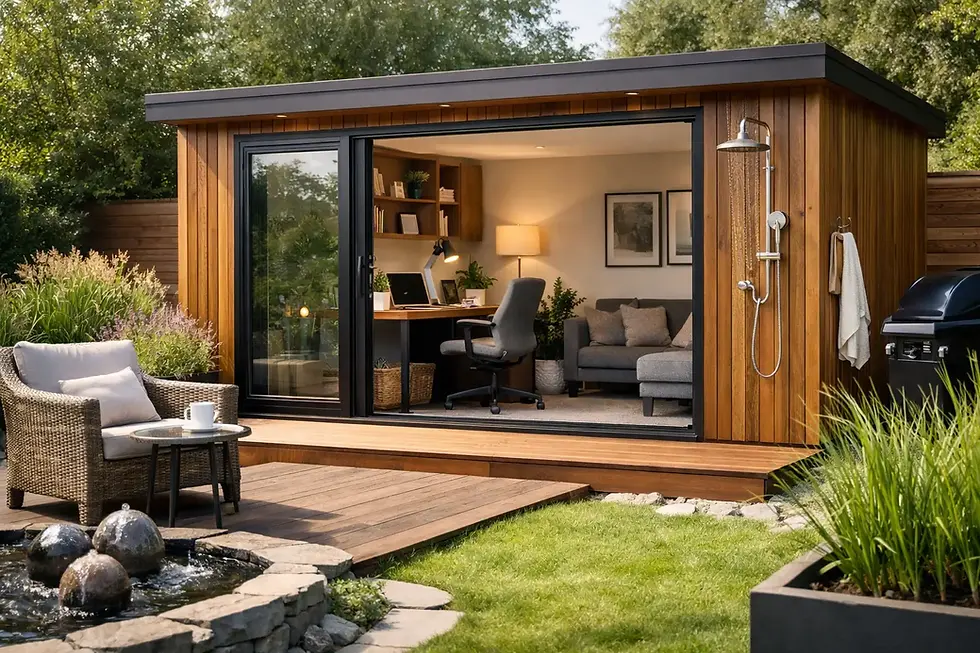
If you are asking can a garden room be lived in, the honest answer is: not usually as a self-contained home, but it depends what you mean by "lived in". Plenty of homeowners use a garden room for long days, late evenings, occasional overnight guests, and year-round day-to-day living as part of the main house. Where things change is when you want it to function as a separate dwelling.
That distinction matters more than most people expect. A beautifully built garden room can feel every bit as comfortable as an internal room in your house, especially when it is designed properly from the outset. But comfort, occasional use and lawful residential occupation are not the same thing.
What does "lived in" actually mean?
For some people, it means a space where they can work all day, relax in the evening and use throughout winter without feeling the cold. For others, it means somewhere a family member can sleep regularly, or a private annexe with a shower room and kitchenette. At the far end, it means a fully independent place to live with sleeping, cooking and washing facilities.
A standard garden room is usually designed as an ancillary building. In plain terms, that means it supports the use of the main home rather than replacing it. A home office, gym, studio, cinema room or occasional guest space all sit comfortably within that category. Once the building starts operating as an independent residence, different planning and building considerations can apply.
Can a garden room be lived in legally?
In many cases, a garden room can be used for everyday living activities, but not as a separate permanent residence. That is the key legal point.
Most garden rooms are installed under permitted development or through straightforward planning routes on the basis that they remain incidental to the house. "Incidental" is an important word. It generally means the building is there to complement the main property, not to become a standalone home.
If someone is sleeping there occasionally after a late evening film, using it as a teenager's den, or spending full working days in it, that is very different from someone treating it as their only place of residence. A self-contained setup with a bedroom, bathroom and full kitchen intended for permanent occupation may need planning permission for change of use or even approval as a separate dwelling, depending on the design and how it will be used.
Because local interpretation can vary, this is one area where assumptions can become expensive. It is always better to address intended use at design stage than to build first and try to justify it later.
When a garden room works well for extended use
A high-quality garden room can absolutely support long hours of comfortable use. In fact, for many homeowners, that is the whole point. If you want a space to work in from morning to evening, host guests, practise yoga, watch films or give older children more independence while still being connected to the main home, a bespoke garden room can be ideal.
The difference lies in specification. Extended use demands more than good looks. Insulation levels, airtightness, glazing, ventilation, heating and overall structural quality all affect whether the room feels like a proper part of your home or just a nice extra building in the garden.
This is where build method matters. A well-designed structure using high-performance materials such as SIP panels can deliver far better thermal efficiency and structural consistency than a lightly built summerhouse-style unit. That means a more stable internal temperature, lower heating demand and a space that feels solid and dependable throughout the year.
Comfort is not just about warmth
People often focus on insulation first, and rightly so, but true liveability goes further. If a room overheats in summer, feels damp in winter, or lacks fresh air once the doors are shut, it will not be enjoyable to use for long periods.
A garden room intended for serious daily use should be designed with seasonal performance in mind. That includes high-quality floor, wall and roof insulation, efficient glazing, sensible shading, background ventilation and a heating solution that suits the size and usage pattern of the space. Lighting, acoustics and internal layout also make a noticeable difference once you move beyond occasional use.
What changes if you want sleeping, washing or cooking facilities?
The more domestic functions you add, the more carefully the project needs to be planned. A shower room or WC may be entirely achievable, but it introduces drainage, water supply, ventilation and building regulations considerations. A kitchenette may also be possible, but once a building appears capable of independent day-to-day living, planners may look at it differently.
That does not mean these features are off limits. It means they must be considered within the intended legal use of the building. For example, an occasional guest room with a shower room is not the same as a detached annexe designed for full-time occupation. The distinction comes down to layout, facilities, access, services and the practical reality of how the building will be used.
A bespoke design process helps here because it allows the building to be tailored around your actual needs rather than forcing a vague brief into a standard box.
Planning permission and building regulations
This is the area most likely to cause confusion, partly because people hear broad statements such as "garden rooms do not need planning permission" and assume that applies in every case. It does not.
Whether planning permission is required can depend on height, position, proximity to boundaries, whether you live in a designated area, and crucially, how the building will be used. A garden office used as an incidental outbuilding is one thing. A detached space intended for someone to live in independently is another.
Building regulations are separate again. Even where planning permission is not needed, parts of the build may still need to comply with regulations, especially if the room is larger, contains sleeping accommodation, or includes electrics, plumbing and drainage.
For homeowners, the practical takeaway is simple: use should lead the design, not the other way round. If you are open from the start about wanting a flexible room with occasional overnight use, that can be planned for intelligently. If your aim is a legally habitable annexe or self-contained accommodation, you need specialist guidance before work begins.
Design choices that make a garden room feel properly usable
A garden room that is pleasant for an hour and one that feels good all day are two different things. Proportion, natural light and connection to the garden all help, but the unseen elements matter just as much.
A strong insulated envelope gives the room year-round usability. Solid foundations and structural integrity help it age well. Good-quality doors and windows improve both comfort and security. Interior finishing also counts. Storage, lighting design and durable materials can turn the building from a simple extra room into a space that genuinely supports your lifestyle.
At Unique Garden Retreats, this is why bespoke design matters so much. A building that looks impressive in photographs is only part of the job. It also needs to perform well in February, feel calm and practical on a busy weekday, and sit naturally within the rest of the property.
The trade-off between flexibility and compliance
Many buyers want a garden room that can adapt over time. That makes sense. A home office might later become a guest space, gym or hobby room. Designing for flexibility is smart, but it needs to stay within the right planning and regulatory framework.
Trying to create something that is unofficially a small house can lead to problems with planning enforcement, resale questions and insurance complications. By contrast, creating a high-spec ancillary space with excellent comfort levels gives you broad day-to-day use without stepping into the wrong category.
If you think your future needs may include accommodation for a relative, it is worth discussing that early. Sometimes the right solution is a carefully planned annexe route rather than a standard garden room. Sometimes it is a beautifully insulated multi-use building that supports family life without being classed as a separate dwelling.
So, can a garden room be lived in?
Yes, in the sense that it can be used comfortably and extensively as part of everyday life. No, not automatically as a separate home.
That may sound like a fine distinction, but it is an important one. The best garden rooms are not just attractive outdoor buildings. They are well-designed spaces that suit the way you actually want to live, work and unwind, while staying aligned with planning rules, building standards and the long-term value of your property.
If you are considering a garden room for more than occasional use, the right question is not just whether you can live in it. It is how you want it to function, who will use it, and how to design it properly from the very beginning.


Comments