


How to Plan a Bespoke Garden Studio
- Mark Moody
- May 12
- 6 min read
The best garden studios do not begin with cladding, glazing or Pinterest boards. They begin with a clear brief. If you are working out how to plan a bespoke garden studio, the real starting point is not what it looks like from the lawn, but how it needs to perform on an ordinary Tuesday in November.
That matters because a studio built for focused work has very different needs from one designed for yoga, music, guests or family overflow. A bespoke build gives you freedom, but it also asks better questions. The more clearly you define the role of the space at the start, the easier every design and construction decision becomes.
How to plan a bespoke garden studio around real use
Start with the reason you want it. A garden studio can be a home office, a gym, a creative room, a treatment space or a flexible retreat that changes through the week. Many homeowners want more than one function, and that is perfectly achievable, but mixed-use spaces need careful planning so they do not end up compromising everything.
Think about who will use it, how often, and at what times of day. If it is for work, privacy, acoustics and dependable broadband will matter. If it is for fitness, floor strength, ventilation and easy-clean finishes move higher up the list. If it is a cinema room or music space, sound control becomes central rather than optional.
It also helps to decide whether this studio is solving a current problem or supporting a longer-term lifestyle change. A room that works brilliantly as an office today might later become a hobby room or teenage den. Bespoke design is valuable because it lets you future-proof the space rather than chasing a single trend.
Position, orientation and the garden itself
Where the studio sits in the garden affects far more than appearance. It influences natural light, privacy, access, internal temperature and how connected the building feels to the house.
A south-facing building can be bright and uplifting, but too much summer sun may cause glare and overheating if glazing is not planned properly. A north-facing space often gives softer, more even light, which can work especially well for offices and studios where screen use or creative work is a priority. East-facing rooms catch morning light beautifully, while west-facing rooms can feel warm and inviting later in the day.
You also need to look at sight lines. Some clients want a studio that feels tucked away and private. Others want it to act as a visual feature from the house. Neither is better, but the design should match the intention. Window placement, door position and landscaping all shape that experience.
Access is another practical point that gets overlooked early on. Ask yourself how you will walk to the building in bad weather, whether exterior lighting is needed, and how construction teams will reach the site during the build. A smooth project often comes down to solving these simple questions before design is finalised.
Planning size and layout without wasting space
Bigger is not always better. The right size for a bespoke garden studio is the one that suits its purpose, sits comfortably in the garden and feels proportionate to your property.
A compact office can work beautifully if the desk, storage and circulation have been thought through. A gym may need less floor area than expected if equipment is chosen carefully, while a cinema room can require more wall space and fewer windows than people first imagine. If you are designing for flexibility, consider how furniture will move and where dead space might appear.
This is where scaled drawings and 3D modelling become genuinely useful. They allow you to test room layouts before anything is built. You can see whether bifold doors are worth the wall space they consume, whether a corner desk leaves enough circulation, or whether built-in joinery would make the room calmer and more efficient.
Ceiling height deserves attention too. A modest footprint can still feel generous if the proportions are right. Equally, a larger room can feel awkward if glazing, roof design and internal layout are not working together.
Design choices that affect comfort all year
A garden studio should not feel like a seasonal extra. If it is truly part of your home life, it needs to be comfortable in January as well as July.
That is why the build system matters. Thermal performance, airtightness and structural quality are not background details in a premium garden room - they are what determine whether the space feels stable, quiet and dependable every day. SIP panel construction, for example, is often chosen because it offers strong insulation and structural integrity in a slim wall build-up, helping create efficient and usable internal space.
Windows and doors need similar thought. Large glazed areas can look impressive, but they must be balanced with insulation, solar gain and privacy. Too much glass can make a room difficult to furnish and harder to regulate. Too little can make it feel enclosed. The best answer usually sits somewhere in the middle, guided by how the studio will actually be used.
Ventilation, heating and lighting should be planned together rather than added at the end. An office needs reliable background warmth and layered lighting. A gym may need stronger airflow. A creative studio might benefit from a combination of task lighting and softer ambient light. Good planning creates comfort that feels effortless.
Power, connectivity and the details that make it work
The most attractive garden studio will quickly disappoint if the practical side is undercooked. Power supply, data provision and internal electrics should be considered from the first design discussions.
Think beyond a few sockets. Consider where your desk sits, whether you need hardwired internet, what heating system you want, whether you need exterior lighting, and if security features should be integrated. If the studio will include a fridge, shower equipment, entertainment kit or specialist machinery, those requirements need to be built into the specification early.
Storage is another detail that separates a polished space from one that feels temporary. In a bespoke studio, storage can be designed as part of the room rather than treated as an afterthought. Built-in solutions often make smaller footprints feel calmer and more functional.
Acoustics can matter just as much as power. If you are taking calls, recording audio, exercising with music or simply trying to escape household noise, the wall build-up, glazing choice and internal finishes all play a role. The right solution depends on use, budget and proximity to neighbours.
Planning permission, regulations and what depends on the brief
Many garden studios fall within permitted development, but not all do. It depends on factors such as overall size, height, position, use and whether your property has any specific restrictions.
This is one of the strongest arguments for planning properly rather than rushing to a design style first. A detached workspace used incidentally to the home may be straightforward. A larger building, one close to a boundary, or one intended for more intensive use can raise different questions. Building regulations may also apply depending on the specification and intended use.
For homeowners, the key is not to become amateur planners overnight. It is to work with a team that can assess the brief, identify likely constraints and support the project before avoidable issues become expensive ones. In Oxfordshire, where site conditions and property types can vary widely, local experience often makes the process faster and calmer.
Budgeting for value, not just the initial figure
A bespoke garden studio is an investment, so budget should be treated as a design tool rather than a final hurdle. The headline cost matters, of course, but so does what is included.
A lower upfront figure can become less attractive once groundworks, electrics, interior finishing, heating, landscaping repairs and design revisions start appearing as extras. By contrast, a more complete service often gives a clearer picture from the outset and reduces the risk of compromise halfway through the build.
It is also worth separating wants from non-negotiables. High-performance insulation, sound construction and quality installation usually deserve priority over cosmetic upgrades that can be added later. The room needs to work first. The finishing touches should enhance that, not distract from it.
For clients who want a smooth route from concept to completion, an end-to-end approach often proves better value in practice. A company such as Unique Garden Retreats can help align design ambition with buildability, performance and finish, so the end result feels considered rather than pieced together.
Finishing the space and restoring the garden
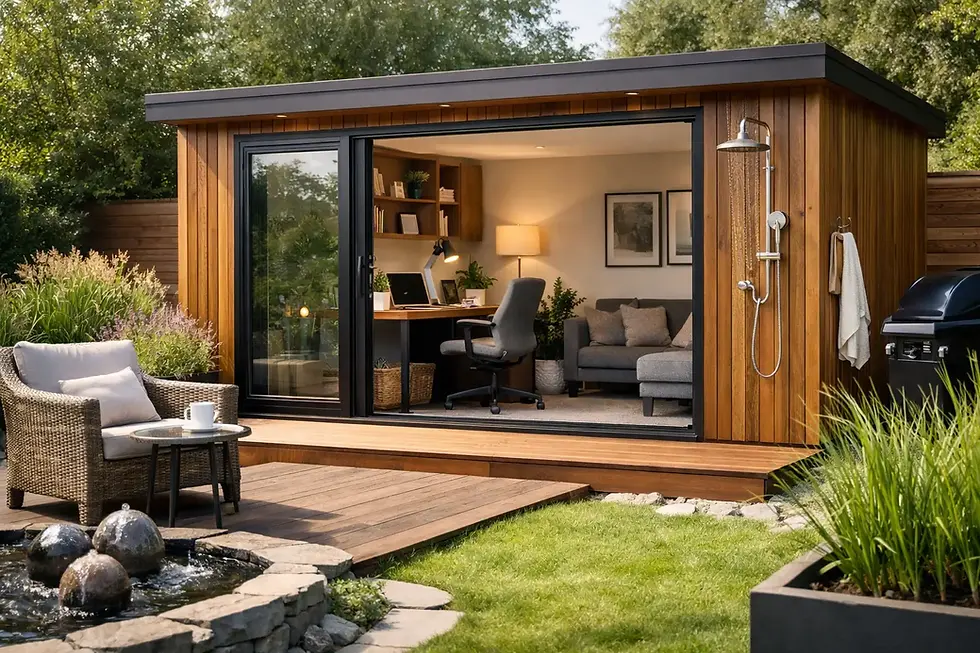
One of the biggest differences between a standard outbuilding and a well-planned bespoke studio is what happens around it. The building should sit naturally in the garden, not feel dropped into it.
That means thinking about paths, planting, exterior lighting, thresholds and how the view from the house will change. A beautiful studio can lose impact if the surrounding lawn is left tired, the levels feel awkward or the approach is muddy in winter. Landscaping does not have to be elaborate, but it should be intentional.
Inside, the same principle applies. Flooring, wall finishes and joinery should support the way the room is used. Calm, durable materials often age better than trend-led choices. If the studio is going to be part of daily life, it should feel settled from the start.
A bespoke garden studio works best when it is planned as part of your home, not as an isolated extra. Get the brief right, respect the practical constraints, and invest in the elements that affect comfort and longevity. The result is not just another room outside - it is a space that earns its place every day.


Comments