


Bespoke Build vs Prefabricated Garden Room
- Mark Moody
- May 2
- 6 min read
When you start comparing a bespoke build vs prefabricated garden room, the biggest difference is not simply how it is built. It is how well the finished space fits your home, your garden and the way you actually plan to use it. A garden room might look similar in a brochure, but once you begin thinking about year-round comfort, planning constraints, layout, insulation and finish, the gap between off-the-shelf and made-to-measure becomes much clearer.
For some homeowners, a prefabricated garden room is a practical answer. For others, it quickly becomes a compromise. The right choice depends on what matters most to you - speed, budget, flexibility, appearance or long-term performance.
Bespoke build vs prefabricated garden room: what is the difference?
A prefabricated garden room is usually designed around a set range of standard sizes, layouts and finishes. Much of it is manufactured in advance, then delivered and assembled on site. That can make the process quicker and, in some cases, less expensive at the starting point.
A bespoke build is designed specifically for your property and your brief. Instead of choosing the nearest match from a fixed range, you shape the room around how you want to use it, how your garden sits, what level of insulation you need and how the building should relate to the house. That often includes tailored dimensions, door and window placement, interior finishes, exterior cladding and practical details such as storage, lighting and heating.
This is why the decision is rarely just about convenience. It is about whether you want a standard product placed in your garden or a space designed to belong there.
When a prefabricated garden room makes sense
There are situations where prefabrication is a sensible route. If your garden is straightforward, your intended use is simple and you are happy working within a standard footprint, a pre-designed unit can be appealing. A compact office, hobby room or occasional retreat may not require extensive customisation.
Lead times can also be shorter. Because the design work is already done and the manufacturing process is repeatable, installation is often more predictable. If speed is a major factor, that can be attractive.
There can be budget advantages too, but this is where it pays to look closely. The headline price is not always the final price. Groundworks, electrical connection, upgraded insulation, interior finishes and landscaping are sometimes treated as extras. What appears cost-effective at first can move upwards once the specification starts matching real everyday use.
Prefabricated rooms are often best suited to buyers who want a straightforward structure with limited changes and are comfortable adapting their expectations to the product.
Where bespoke design earns its value
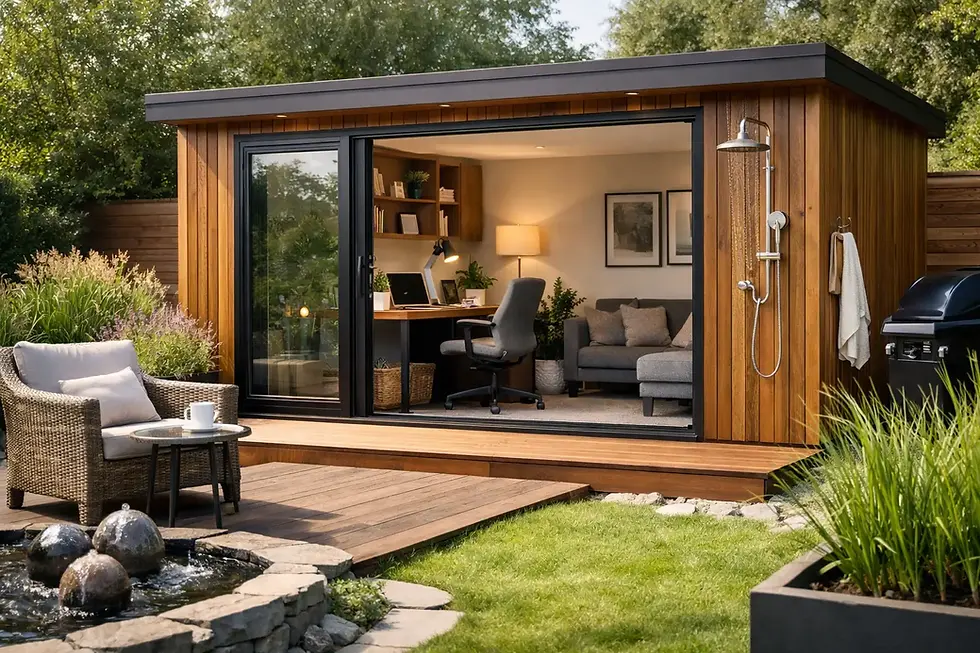
A bespoke garden room comes into its own when the building needs to do more than fill a corner of the garden. If you are creating a proper home office, a gym with specific equipment requirements, a cinema room, a guest space or a multi-use retreat, the details matter.
Those details begin with the footprint, but they do not end there. Ceiling height can affect how spacious the room feels. Glazing placement changes light levels, privacy and how the building sits in relation to neighbouring boundaries. The thickness and quality of the building envelope affect whether the room feels warm in January and comfortable in August.
A bespoke approach also matters when your site is less straightforward. Sloping ground, awkward access, mature planting, listed surroundings or a need to preserve the overall look of the garden all call for considered planning. Standard units are not always flexible enough to deal elegantly with these conditions.
For many homeowners, the strongest argument for bespoke is that it produces a result that feels intentional. The building looks right, functions properly and supports daily life without compromise.
Design freedom affects more than appearance
One of the biggest misconceptions in the bespoke build vs prefabricated garden room discussion is that custom design is mainly about aesthetics. In reality, design freedom affects how the room performs.
Take a garden office as an example. If you spend full working days there, you may want acoustic insulation, carefully positioned windows to reduce screen glare, integrated storage, dependable heating and enough wall space for practical furniture layout. A standard unit may offer some of that, but not always in the right combination.
The same applies to a home gym. Floor loading, ventilation, ceiling clearance and access all matter. A cinema room needs different priorities again, with greater control over light, sound and interior finish. The more specific the use, the more valuable a tailored design becomes.
That is where a proper design-and-build service often sets itself apart. It is not only about constructing the room. It is about understanding how you want the space to work and resolving those needs before the build begins.
Build quality and thermal performance
Not all garden rooms are built to the same standard, even when they look similar from the outside. This is one of the most important points for buyers who want a space they can use comfortably all year.
Lower-spec prefabricated models can rely on lighter construction methods and thinner insulation. That may be acceptable for seasonal use, but it can become limiting if the room is expected to perform like a real extension of the home. Cold spots, overheating, noise transfer and higher running costs tend to show up over time rather than on day one.
A bespoke build gives greater control over the structure and fabric of the building. High-performance systems such as SIP panels can offer excellent thermal efficiency, strength and consistency when designed and installed properly. Better materials and detailing usually mean better comfort, better energy performance and a longer-lasting building.
If you are investing in a garden room as a permanent part of your property, construction quality should carry at least as much weight as initial appearance.
Cost: upfront price versus long-term value
Price is often the first question, but it should not be the only one. A prefabricated room may come in lower initially, especially if you stick closely to the base specification. For some buyers, that is enough reason to proceed.
But long-term value depends on more than the purchase figure. If the room needs upgrades to become usable through winter, if the interior feels too generic, or if the layout never quite works, the cheaper option may not feel economical after the first year.
A bespoke room usually costs more because it involves individual design, tailored construction and a more considered finish. Yet that additional investment often delivers better day-to-day satisfaction, stronger visual integration with the property and a building that can adapt to changing needs.
It may also add more meaningful value to the home because it feels like a deliberate improvement rather than a temporary addition.
Project experience matters as much as the finished room
Another overlooked difference is how the process feels from start to finish. With a prefabricated purchase, the process can be fairly transactional. You choose a model, select a few options and arrange installation.
That can be perfectly adequate, but it may leave more for you to coordinate, especially if planning support, groundwork, electrical work, interior finishing or reinstating the garden sit outside the main package.
A bespoke service is usually more consultative. You have the opportunity to discuss ideas, review layouts, understand technical options and shape the project around your site. Where the provider offers end-to-end support, the experience tends to be smoother because the design, planning considerations, construction and final detailing are treated as one joined-up project.
For homeowners who value clarity and want to avoid avoidable stress, that level of support can be a major benefit. It is one reason many clients in Oxfordshire choose a specialist such as Unique Garden Retreats when they want a premium result without piecing everything together themselves.
How to choose the right option for your property
The best choice comes down to how you answer a few practical questions. Do you want the fastest route to a usable space, or do you want the building to feel fully integrated with your home? Is your garden straightforward, or does it need a solution shaped around the site? Will the room be used occasionally, or every day in all seasons?
You should also ask how much compromise you are genuinely comfortable with. If moving a window, changing the footprint or improving thermal performance matters to you now, it will matter even more once the building is in place.
A prefabricated garden room can be a good solution when the brief is simple and expectations are realistic. A bespoke build is usually the better route when quality, longevity and personalisation matter more than speed alone.
The most useful way to think about it is this: your garden room should earn its place. If it is going to become part of your daily routine and part of the character of your home, it is worth choosing a route that treats it as more than a standard add-on.


Comments