

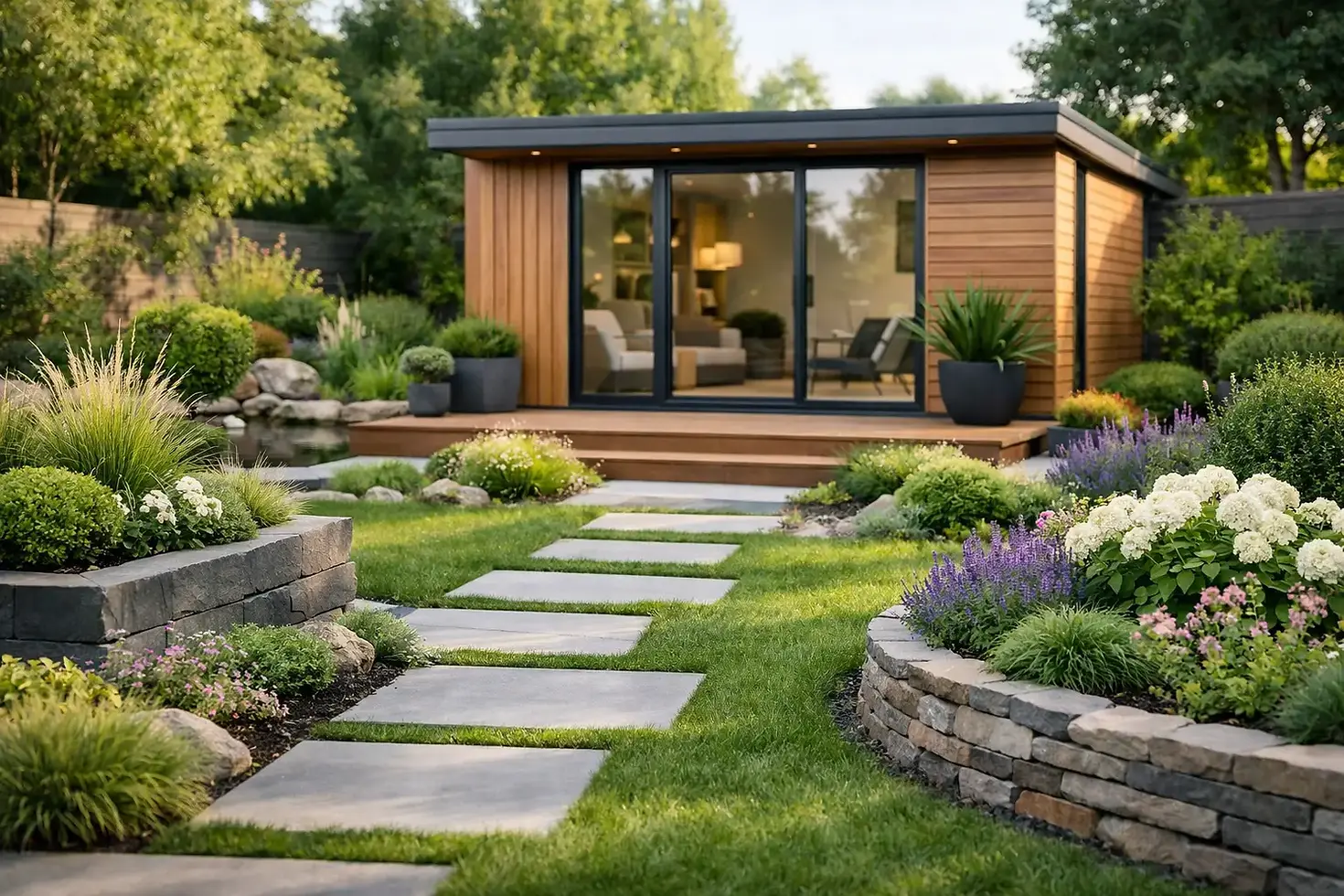
Transform Your Space: The Importance of Landscaping After Your Garden Room Build
- Mark Moody
- Mar 29
- 6 min read
Updated: Apr 7
Why Landscaping Matters After the Build
A well-built garden room changes how the garden works. It creates a destination, introduces a new footprint, and often alters movement through the space. What used to be a simple lawn or planting area may now need a clearer route, better structure, and stronger visual balance.
There is also a practical side to this. During installation, parts of the garden may be disturbed by groundwork, access routes, or material storage. Even with careful project management, some reinstatement is usually needed. Proper landscaping does more than tidy up after construction - it helps protect the building, improves usability in all weathers, and restores the sense that the garden has been designed as a whole.
For many homeowners, this is also the point where the garden room starts to feel genuinely useful. A home office needs comfortable, dry access in winter. A gym benefits from privacy and screening. A cinema room or relaxation space feels more inviting when the outside setting has softness, texture, and structure.
Garden Landscaping After Garden Room Installation - Where to Start
The best place to start is with how you want to approach and use the room day to day. That sounds obvious, but it is where many landscaping decisions become easier. If the garden room will be used every morning as an office, direct access matters more than decorative flourishes. If it is a leisure space used mainly in the evening or at weekends, you may want more emphasis on atmosphere, planting, and lighting. For family gardens, durability and low maintenance often need to sit alongside appearance.
It also helps to step back and assess what the installation has changed. Look at ground levels, any exposed edges around the base, sightlines from the house, and whether the new building has interrupted existing planting. These details shape the landscaping brief.
A sensible plan usually considers five connected elements: access, drainage, ground finish, planting, and visual integration. Treated separately, they can feel pieced together. Planned together, they produce a cleaner result.
Getting the Access Right
The route to the room should feel intentional. That does not always mean a wide formal path, but it should suit the style of the property and the way the space will be used. For an office or regularly used studio, a stable path is usually essential. Gravel can work well in some gardens, but it is not ideal for every client - especially if you want a cleaner finish, easier year-round access, or a surface that works well for bikes, pushchairs, or mobility needs. Porcelain paving, natural stone, and quality block paving can all create a more dependable route, provided they are laid properly with the right sub-base.
The width matters too. A path that is too narrow can make the room feel detached. Slightly wider access often makes the whole scheme feel more generous and considered, particularly when paired with edging or planting. If there are steps, changes in level, or sloping ground, these need careful handling. What looks attractive on plan may feel awkward in daily use. In many cases, a gentle level transition is more successful than trying to force a dramatic feature into a practical route.
Drainage Is Not Glamorous, But It Is Essential
One of the most important parts of garden landscaping after a garden room sits beneath the surface. Water needs somewhere to go, and poor drainage can quickly undermine an otherwise excellent project. When a new structure is added, rainwater behavior changes. Hard surfaces increase runoff, roof water needs managing properly, and previously absorbent areas may become more compacted during the build. If landscaping ignores this, you may end up with standing water near the entrance, saturated planting beds, or muddy sections that are difficult to maintain.
This is why the surrounding levels and finishes need to be designed with drainage in mind. Permeable materials can help in some settings. In others, the better solution may be a combination of falls, discreet drainage channels, and carefully prepared borders that cope well with moisture. It depends on the site, soil, and how much hard landscaping is being introduced. A premium finish is not only about what you can see. It is also about knowing the space will work properly through a wet Oxfordshire winter.
Choosing Surfaces That Suit the Building
The landscaping should support the style of the garden room, not compete with it. A bespoke building with clean lines and high-quality finishes usually benefits from materials that echo that level of refinement. Porcelain paving creates a crisp, contemporary look and works particularly well with modern offices, gyms, and multi-use spaces. Natural stone feels softer and can tie in well with established gardens or period properties. Timber decking can bring warmth, although it needs thoughtful placement and maintenance planning. Composite decking offers a lower-maintenance option, but it is important that the color and detailing feel right for the setting.
There is no single correct answer. The right choice depends on the architecture of the room, the character of the main house, and how much upkeep you want long term. This is one of the areas where bespoke advice makes a real difference because the most attractive option on its own is not always the most appropriate one in context.
Planting Helps the Room Belong
A new garden room can look striking, but it rarely wants to feel isolated. Planting is often what softens the transition between building and garden. That might mean structured borders along a path, ornamental grasses to add movement, evergreen planting for year-round definition, or layered shrubs that make the room feel settled more quickly. In smaller gardens, planting can also help scale the structure correctly, reducing the sense of hard edges.
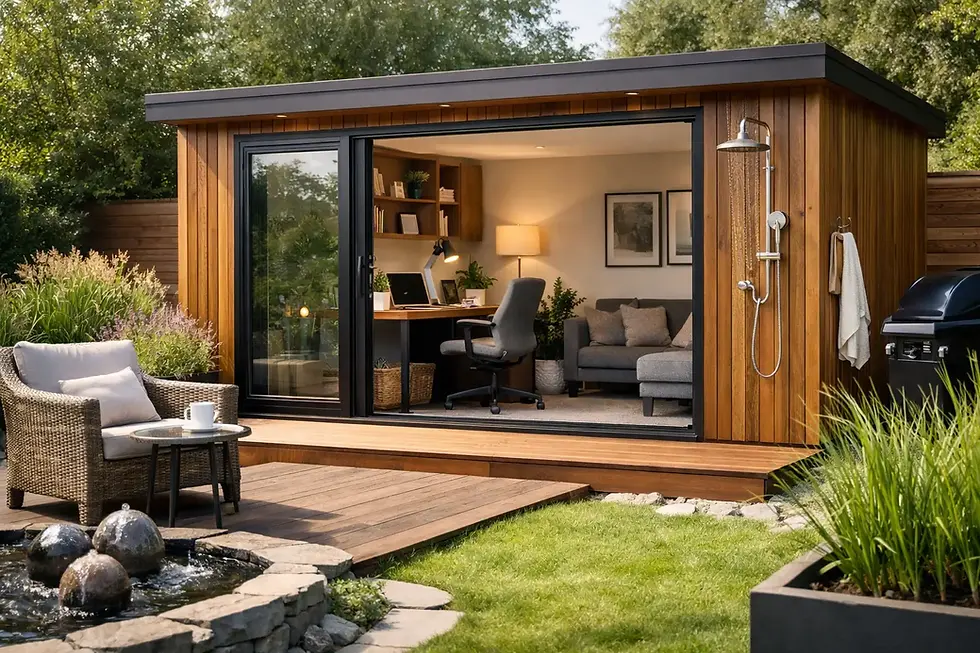
Privacy is another consideration. If your garden room is used as an office or gym, selective screening can improve comfort without making the space feel boxed in. Trellis, pleached elements, or taller planting can all help, but the balance matters. Too much enclosure can block light and make the area feel cramped. It is usually best to think in terms of framing rather than hiding. The goal is to integrate the building, not apologize for it.
Restoring the Wider Garden After Construction
Even when the finished room is the main event, the surrounding garden still needs to recover well. Turf may need replacing, borders can require reshaping, and compacted areas may benefit from soil improvement before replanting. This stage is easy to underestimate. A smart new room beside worn grass, patchy edges, or unfinished ground can make the whole project feel less complete than it should. By contrast, careful reinstatement gives the impression that everything was always meant to be there.
This is one reason many clients prefer a full-service approach. When the same team considers the building and the post-build landscape together, the end result is more cohesive. At Unique Garden Retreats, that joined-up thinking is often what gives a bespoke project its calm, finished quality.
Balancing Appearance With Maintenance
Most homeowners want the landscaped area around a garden room to look impressive, but not become another demanding job. The right balance depends on your priorities. If you enjoy gardening, more detailed planting and seasonal variation may be worthwhile. If you want a clean, simple setting with minimal upkeep, structured hard landscaping with evergreen planting, mulch, and controlled border shapes is often a better fit. Artificial grass is sometimes considered, but it can look out of place next to a premium bespoke building unless handled very carefully.
This is where honesty matters. A beautiful scheme that does not suit your available time will rarely stay beautiful for long.
Lighting Makes the Room Usable Beyond Daylight
Landscaping is not only a daytime concern. If the garden room is used in winter, early mornings, or evenings, lighting should be part of the plan rather than an afterthought. Subtle path lighting, step lights, and carefully placed accent lighting can make access safer while also improving the atmosphere around the building. The key is restraint. Over-lighting can make a garden feel harsh and flatten the very textures you are trying to highlight.
The best schemes support practical movement first, then add warmth and depth. Done properly, lighting helps the garden room feel connected to the house after dark rather than disappearing into shadow.
A Finished Garden Room Should Feel Anchored
The most successful projects do not stop at the external walls. They continue into the ground plane, the planting, and the way you move through the space. Good garden landscaping after a garden room gives the building presence, purpose, and permanence. If you are planning this stage, think less about adding decoration and more about creating connection. When the route works, the levels are right, the planting feels settled, and the finishes suit the build, the room stops feeling newly installed and starts feeling like part of home. That is usually the moment the whole investment makes complete sense.
If you are looking to create a unique garden retreat, consider how landscaping can enhance your new space. A well-thought-out landscape design will not only beautify your garden room but also ensure it integrates seamlessly into your outdoor environment.


Comments