


Garden Studio vs Summer House: Which Fits Best?
- Mark Moody
- Jun 13
- 6 min read
If you are weighing up a garden studio vs summer house, the right choice usually comes down to one simple question - do you want a pleasant seasonal retreat, or a fully usable room that performs like part of your home? From the outside, they can sometimes look similar. In practice, they are built for very different expectations.
For many homeowners, that difference becomes clear only after they start thinking about how the space will actually be used. A quiet office for daily work, a gym with reliable warmth in winter, or a cinema room with proper lighting and comfort needs far more than four walls and a roof. A place to sit with a book on a bright afternoon asks much less.
Garden studio vs summer house: the core difference
A summer house is generally a lighter, more traditional garden building designed for occasional use, especially in milder weather. It often suits relaxed, informal purposes such as reading, entertaining or enjoying the garden. In many cases, it is chosen for charm and simplicity rather than technical performance.
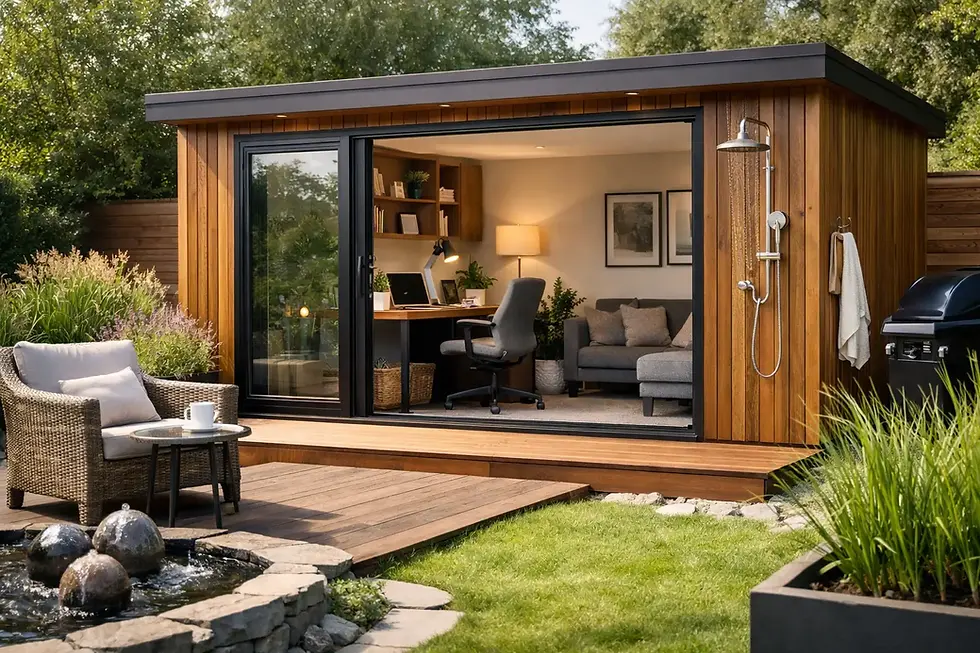
A garden studio is usually a more substantial, purpose-built structure designed for regular, often year-round use. It tends to be insulated, weather-tight and finished to a much higher standard internally and externally. In other words, it is less like a decorative outbuilding and more like an extra room placed beautifully within the garden.
That distinction matters because it affects comfort, durability, running costs and what the building can realistically support over time.
When a summer house makes sense
There is still a clear place for the summer house. If you want a garden feature that adds character and gives you somewhere pleasant to sit in spring and summer, it can be an appealing option. It often has a softer, more traditional feel and may come at a lower initial cost, particularly if you are comparing it with a fully bespoke garden room.
For homeowners who do not need power, strong thermal performance or daily usability, that can be perfectly sensible. A summer house can be ideal for occasional leisure use, children's play, light storage or a simple entertaining space when the weather is on your side.
The trade-off is that many summer houses are not intended to cope with the same demands as a building used every day. If the temperature drops, condensation forms, or you want to spend eight hours working inside in January, the limitations appear quite quickly.
Where a garden studio earns its value
A garden studio comes into its own when the building needs to work hard. If you are creating a home office, treatment room, creative studio, gym or multi-use retreat, comfort and performance are not luxuries - they are the basics.
A properly designed garden studio will usually include meaningful insulation in the floor, walls and roof, dependable glazing, durable structural materials and a layout tailored to the way you plan to live in the space. Heating and electrics can be integrated from the start. Lighting can be planned around work, relaxation or exercise. Storage can be built in, rather than squeezed in later.
This is where bespoke design makes a genuine difference. Instead of forcing your ideas into a standard footprint, the building can be shaped around the way you use your home and garden. That often leads to a space that feels considered rather than simply added on.
Construction quality changes everything
One of the biggest differences in the garden studio vs summer house decision is how each building is constructed.
A summer house is often made using lighter timber sections and more basic glazing, with a simpler wall build-up and fewer performance-focused details. That is not necessarily a problem if the building is being used lightly and seasonally. But it does affect lifespan, comfort and resilience.
A garden studio is usually built more like a permanent extension to your lifestyle. Better structural systems, stronger wall construction and higher-grade materials all contribute to a building that feels solid underfoot, quieter inside and more reliable in changing weather. When high-performance systems such as SIP panels are used, the building can achieve excellent thermal efficiency alongside impressive structural strength. That matters not just in winter, but throughout the year, because overheating in summer can be just as frustrating as being cold in December.
The result is a space that feels stable and dependable rather than temporary.
Think beyond the purchase price
Cost is always part of the conversation, and fairly so. A summer house will often cost less upfront than a fully insulated, bespoke garden studio. If budget is the main driver and your needs are modest, that may be enough to settle the matter.
But it helps to look at value rather than price alone. If you buy a cheaper building and then discover it is too cold for winter use, too hot in summer, or not robust enough for your intended purpose, the lower entry cost can start to look less convincing. Retrofitting insulation, electrics or interior finishes is rarely as tidy or cost-effective as designing them properly from the outset.
A garden studio tends to represent a bigger investment because it delivers more. It is designed to support daily life, not occasional use. For many homeowners, that means better long-term value, especially when the building replaces rented office space, creates room for a home business or adds meaningful lifestyle function to the property.
How you plan to use it should guide the choice
The simplest way to decide is to be honest about your habits, not your aspirations.
If you picture yourself using the space a few times a month in fair weather, a summer house may be all you need. If you know you will be in there before breakfast for work calls, after work for a training session, or at weekends with family and guests, a garden studio is usually the more appropriate answer.
It is also worth thinking ahead. People often begin with one purpose in mind and then want the building to do more. A garden office becomes a teenage study room, then a guest space, then a hobby room. A flexible, better-built structure can adapt far more easily over time.
Planning, compliance and practicalities
Both types of building may fall within permitted development in some situations, but that does not mean the same rules or practical considerations apply in every case. Size, height, location, intended use and proximity to boundaries can all influence what is possible.
This is another area where a purpose-led approach matters. If the building is going to be used seriously and installed as part of a larger garden transformation, it helps to have proper planning support, clear drawings and technical understanding from the start. A well-managed project should consider the building itself, access during installation, service connections, internal finishing and how the surrounding garden will be restored afterwards.
That joined-up thinking is often the difference between a project that feels smooth and one that becomes stressful.
Appearance matters, but so does integration
Homeowners are often drawn first to style. That is understandable - the building has to look right from the house, from the patio and from the far end of the garden. But appearance should not be separated from function.
A summer house may suit a more traditional garden aesthetic, especially where the aim is decorative charm. A garden studio can be designed in a contemporary or classic way, but its best versions do more than sit neatly in the corner. They relate to the garden as a whole, with glazing positioned for privacy and light, cladding chosen to complement the property, and landscaping used to make the building feel settled rather than imposed.
For clients investing in a premium outdoor room, that integration is a major part of the result. The building should feel like it belongs there.
Which option is right for you?
If you want a lovely garden feature for occasional enjoyment, a summer house may suit you perfectly well. If you want a high-performing room that supports work, wellbeing or everyday living through all seasons, a garden studio is usually the stronger choice.
Neither option is universally better. The right answer depends on how often you will use the space, how comfortable it needs to be, and whether you are looking for a simple outbuilding or a genuine extension of the way you live. For homeowners across Oxfordshire investing in quality, flexibility and a tailored finish, that is often where a bespoke garden studio proves its worth.
The best outdoor building is not the one that looks good on day one - it is the one that still feels right, useful and enjoyable years after it has become part of your routine.


Comments