


Garden Room Design Trends for Modern Homes
- Mark Moody
- Apr 18
- 6 min read
A garden room used to be seen as a simple add-on - a smart way to gain a bit of extra space without extending the house. Now, the most interesting garden room design trends are far more considered. Homeowners are asking for spaces that feel every bit as polished, comfortable and useful as the rooms inside the home, while still making the most of the garden setting.
That shift matters because a garden room is no longer just about square metres. It is about how the space works on a wet Tuesday in January, how it looks from the kitchen window, and whether it still suits your life five years from now. The strongest trends are not gimmicks. They are practical design decisions that improve comfort, flexibility and long-term value.
Garden room design trends are moving beyond single-use spaces
One of the clearest changes is the move away from highly fixed-purpose rooms. A few years ago, many people wanted a garden office and only a garden office. Today, clients are more likely to want a room that can handle work calls in the morning, family use in the evening and guests at weekends.
That does not mean every garden room should be an empty box with no personality. It means the design needs to support more than one mode of living. Built-in storage, discreet media units, bench seating and carefully positioned sockets all help a room switch functions without feeling cluttered.
This is especially relevant for homeowners who want to make a serious investment. A bespoke room that can adapt with changing routines is often a better long-term choice than one designed too narrowly around a single current need. A home gym may later become a studio. A cinema room may need to double as a quiet workspace. Good design allows for that without compromise.
A softer, more residential look
The stark, ultra-minimal garden room is giving way to something warmer. Clean lines still matter, but many homeowners now want interiors that feel settled and inviting rather than clinical. Timber tones, textured wall finishes, layered lighting and more thoughtful joinery are all part of that change.
Externally, this often means balancing contemporary forms with materials that sit more comfortably in the garden. Slim cladding profiles, muted colours and restrained detailing tend to age better than trend-led finishes that feel too tied to a particular moment. A garden room should look current, but it should also feel at home next to planting, paving and the existing architecture.
Inside, the same principle applies. The best spaces do not try too hard. They feel calm, well proportioned and properly finished. That usually comes from a combination of good natural light, durable materials and a clear understanding of how the room will actually be used day to day.
Glazing is getting smarter, not just bigger
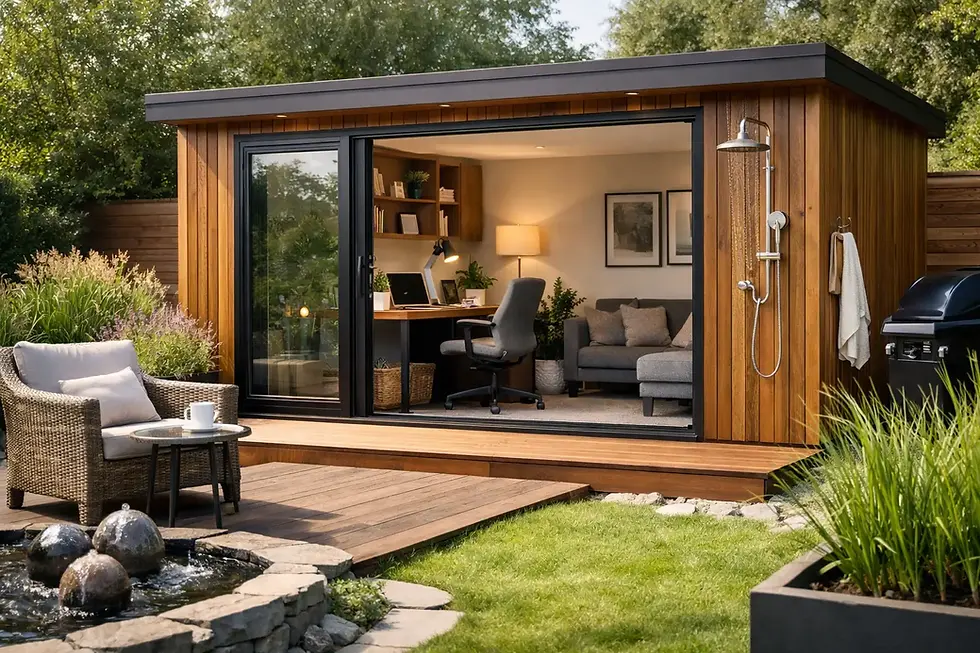
Large areas of glass remain popular, and for good reason. They connect the room to the garden, bring in natural light and help even a compact building feel more generous. But one of the more sensible garden room design trends is a move towards better-balanced glazing rather than simply more of it.
Full-width bi-fold or sliding doors can look impressive, but they are not always the right answer. Too much glazing can reduce usable wall space, create overheating in summer and affect privacy, particularly in overlooked gardens. In some layouts, a well-placed picture window and a set of doors deliver a better result than an entirely glazed front.
Orientation matters here. South-facing rooms may need solar control considerations, shading or a glazing layout that prevents the space becoming too hot. North-facing rooms need to work harder for light. This is where bespoke design makes a real difference, because the right glazing strategy depends on the specific plot, the garden, and the intended use of the room.
Year-round comfort is now expected
A garden room that only works in mild weather is unlikely to satisfy modern buyers. Thermal performance has moved from nice-to-have to essential, especially for clients planning to use the building as an office, gym or regular living space.
That is why construction quality is playing a bigger role in design conversations. It is not just about what looks good on the outside. It is about the fabric of the building - insulation, airtightness, structural integrity and the way different materials perform over time. SIP panel construction, for example, is increasingly valued because it supports strong thermal efficiency and a solid, dependable build.
Heating choices are part of this trend too. Electric underfloor heating remains attractive for its clean finish and comfort underfoot, but it depends on room size, flooring choice and how often the space will be used. In some cases, wall-mounted heating is the more practical option. The important point is that comfort should be designed in from the beginning, not added as an afterthought.
Lighting is becoming more architectural
Lighting used to be one of the last decisions made on a garden room project. Now it is often a central part of the design. That is a welcome change, because lighting has a major effect on how premium the finished space feels.
A single centre light rarely does enough. Instead, homeowners are choosing layered schemes that combine downlights, wall lights, feature pendants and joinery lighting. The aim is not to overcomplicate the room. It is to create flexibility, so the space can feel bright and practical when needed, then softer and more relaxed later in the day.
This is especially effective in multi-use rooms. A garden office needs focused task lighting, while the same room may need warmer, more ambient lighting in the evening. Planning this early also helps with cable routes, switch positions and the cleaner integration of fixtures.
Storage is being built in, not brought in later
One sign of a well-designed garden room is that it does not rely on freestanding furniture to solve every problem. More clients are asking for integrated storage because it keeps the room streamlined and makes better use of the footprint.
That could mean full-height cabinetry in an office, concealed equipment storage in a gym, or low-level media units in a cinema room. In smaller buildings, built-in solutions are often what make the room feel spacious rather than squeezed.
There is also a practical advantage. Garden rooms need to work hard without becoming dumping grounds for garden tools, spare chairs and household overflow. When storage is designed properly, the room stays true to its purpose and remains visually calm.
Outdoor connection matters as much as the building itself
A strong trend is the growing focus on what happens around the garden room, not just within it. The approach path, surrounding planting, patio area and views from inside all shape the experience of the building.
This is often where a project either feels complete or slightly disconnected. A beautiful room can lose impact if it appears dropped into the garden without thought for landscaping or levels. Equally, a modestly sized building can feel far more impressive when framed by good paving, soft planting and considered lighting.
For homeowners in Oxfordshire, this often means respecting the character of the property and the garden rather than forcing a style that does not belong. The most successful schemes feel coherent from house to garden room. That usually comes from joined-up thinking across design, installation and finishing.
Sustainability is becoming more practical
Sustainability in garden room design is moving away from marketing language and towards practical questions. How efficient is the building to heat? Will the materials last well? Can the structure support long-term use without frequent repair or replacement?
Clients are generally less interested in vague claims and more interested in sensible performance. Durable external materials, responsibly sourced timber products, efficient insulation and construction methods that reduce waste all matter. So does designing a room that will still be useful in years to come, because longevity is part of sustainability too.
For some projects, technical performance also links to wider building considerations, especially where developers or housebuilders are involved. In those cases, a stronger understanding of thermal values, build systems and SAP-related implications can be just as important as the visual finish.
Personalisation is replacing off-the-shelf thinking
Perhaps the biggest trend of all is the move towards true personalisation. Homeowners are increasingly wary of standard units that look fine in a brochure but do not quite fit the site, the house or the way they live.
A bespoke approach allows for better proportions, more intelligent window placement, tailored interior finishes and a smoother fit within the garden. It also helps with the less visible details, from planning support to build logistics and the final touches that make the room feel complete.
That is often where the value lies. A garden room should not just fill space at the end of the garden. It should solve a problem, improve daily life and feel as though it belongs there. At Unique Garden Retreats, that is why the design stage matters so much - because the most worthwhile trends are the ones that lead to a room you will still enjoy using long after fashions have moved on.
If you are thinking about a garden room, the best place to start is not with a finish or a door style. It is with a clear look at how you want to live in the space, and what will make it work beautifully all year round.


Comments