


Can You Build a House From SIPs?
- Mark Moody
- Apr 11
- 6 min read
Picture a build that goes up faster, feels solid underfoot, and holds heat properly once you move in. That is usually the real question behind can you build a house from SIPs - not simply whether it is possible, but whether it is a smart choice for the way you want to live and build.
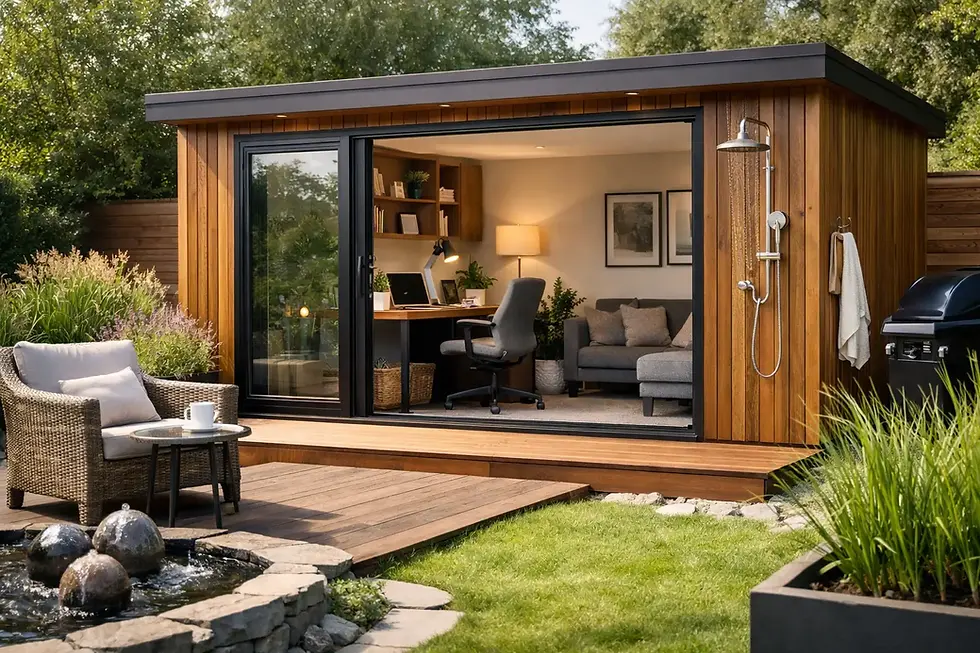
The short answer is yes. Structural insulated panels, or SIPs, are used to create full houses as well as garden rooms, extensions and annexes. They form part of the building envelope, combining structure and insulation in one panel, which makes them a practical option for projects where energy performance, build speed and precision matter.
What matters more is whether SIPs suit your site, design, budget and programme. Like any building system, they come with clear strengths and a few constraints that are worth understanding before you commit.
Can you build a house from SIPs in the UK?
Yes, and it is already being done across the UK for self-build homes, developer-led schemes and one-off bespoke properties. SIP construction is well suited to modern housing because it offers predictable thermal performance, factory-made accuracy and a relatively quick on-site assembly process.
A SIP panel usually consists of an insulating foam core sandwiched between structural boards. Once manufactured, panels are cut to the project design and delivered ready for installation. Floors, walls and roofs can all be formed using SIPs, depending on the structural design.
For homeowners, that often translates into a cleaner, more controlled build. For developers and housebuilders, it can mean better consistency and fewer variables on site. It is not a shortcut in the careless sense - the design, engineering and detailing still need to be right - but it is a system that rewards good planning.
Why SIPs work well for house building
The biggest appeal is efficiency, in more ways than one. Because the panels arrive prefabricated, the shell of the house can be erected quickly compared with some traditional methods. That can reduce time on site, limit exposure to poor weather and help move the project on to first fix and internal works sooner.
Thermal performance is another major advantage. SIPs are designed to create a highly insulated envelope with fewer thermal bridges than many conventional build-ups. In practical terms, that can help a home stay warmer in winter, more stable in temperature and cheaper to run over time, provided the rest of the specification is equally well considered.
There is also the question of strength. SIP buildings are known for their structural integrity, especially when correctly engineered and installed. Panels can deliver an impressive strength-to-weight ratio, which makes them suitable for a wide range of domestic designs.
Then there is precision. Factory manufacturing allows panels to be produced to accurate dimensions, which can improve fit, reduce waste and make the build process more predictable. That tends to appeal to clients who want quality without the uncertainty that can creep into more labour-heavy construction methods.
What a SIP house is actually made from
Although people often speak about building a house from SIPs, the panels are only one part of the whole system. A finished house still needs foundations, structural calculations, external cladding or brickwork where specified, internal finishes, roofing, windows, doors, ventilation and building services.
In many projects, SIPs form the structural shell rather than every single element of the building. The finished look can still be very traditional or very contemporary. A SIP house does not have to look like a prefabricated unit. It can be rendered, clad in timber, finished in brick slips or designed to sit comfortably among period and modern homes alike.
That flexibility is one reason SIPs have become more attractive to bespoke projects. You get the performance benefits of the system without being forced into a narrow design style.
The trade-offs you should know about
SIPs are not the right answer for every project, and it is better to be honest about that. The first consideration is design coordination. Because panels are manufactured in advance, decisions around openings, roof forms, junctions and service runs need to be made earlier and with more certainty than on some traditional builds.
That is often a good discipline, but it can feel restrictive if you expect to make major structural changes once construction is underway. Late design changes can be costly and disruptive because the system relies on pre-cut accuracy.
Service installation also needs thought. Electricians, plumbers and ventilation installers must work with the panel system rather than treat it like a standard stud wall. This is very manageable, but it should be planned from the outset.
Moisture management is another area where detailing matters. SIPs perform extremely well when designed and installed correctly, but airtight, well-insulated buildings need proper ventilation and careful attention to condensation risk. That is not a flaw in SIPs - it is part of building a high-performance home properly.
Finally, upfront costs can vary. SIPs are not always the cheapest line item if you compare shell materials in isolation. But that comparison can be misleading. Faster installation, reduced waste, lower labour input in some phases and improved long-term energy performance can shift the overall value picture considerably.
Can you build a house from SIPs and meet regulations?
Yes, provided the design, engineering and construction are carried out correctly. A SIP house in the UK must still comply with Building Regulations just like any other home. That includes structure, fire safety, insulation, ventilation, moisture control and energy performance.
This is where technical knowledge becomes important. SAP calculations, airtightness strategy and junction detailing all play a role in how the finished house performs and how smoothly compliance is achieved. SIPs can support strong results, but the wider specification still matters. Good windows fitted badly will still be a problem. Poor ventilation design will still be a problem.
That is why an experienced build team matters just as much as the panel system itself. The best outcomes come when the design, manufacturing and installation process are aligned from the beginning.
When SIPs make the most sense
SIPs are especially attractive when speed, thermal efficiency and clean construction are high priorities. They suit self-builders who want a modern, well-insulated home and developers who need a dependable build programme. They also work well on bespoke projects where precision and performance matter more than following a standard brick-and-block route simply because it is familiar.
They can be particularly useful where a client wants to future-proof a property against rising energy costs. A well-designed SIP home can offer a more comfortable day-to-day living environment, not just a better specification on paper.
The system also makes sense for clients who value off-site manufacturing quality. If you prefer a process that is planned, measured and controlled rather than improvised on site, SIP construction tends to feel like a better fit.
What to ask before choosing SIPs
Before moving ahead, ask how the system will work with your design rather than asking whether SIPs are good in general. The right questions are practical ones. How will the foundations and superstructure connect? What is the wall build-up? How are windows detailed? What ventilation strategy will be used? How will airtightness be achieved and tested?
It is also worth asking who is responsible for each stage. On any successful project, there is clarity around design coordination, manufacturing, installation and finishing. That avoids the gaps that can appear when too many trades are working in isolation.
If you are weighing up a bespoke home, extension or separate living space, the same principle applies. A building system should support the end result you want, not dictate it.
At Unique Garden Retreats, that balance between craftsmanship, technical performance and careful project planning sits at the heart of how well-built spaces come together.
So, can you build a house from SIPs?
Absolutely. You can build a full house from SIPs, and for many projects it is a very sensible route. The real advantage is not just that SIPs make building possible - it is that they can make it faster, warmer, more precise and more efficient when the design and installation are handled properly.
If you are considering a new home or another high-performance building project, treat SIPs as a serious option rather than a niche alternative. The best building choices are rarely about fashion. They are about finding a method that delivers the comfort, quality and reliability you will appreciate long after the build team has left site.


Comments