


9 Multi Purpose Garden Room Examples
- Mark Moody
- May 24
- 7 min read
When a spare bedroom becomes a permanent office, the dining table turns into a homework station and the living room doubles as a gym floor, the appeal of a better solution becomes obvious. That is where well-planned multi purpose garden room examples are genuinely useful - not as Pinterest inspiration, but as practical models for creating space that works harder every day.
For most homeowners, the challenge is not simply adding square footage. It is creating a room that feels calm, attractive and purposeful, while still being flexible enough to handle real life. A garden room can do that brilliantly, but only if the design starts with how you actually want to use it across a week, a season and a few years.
Why multi-use matters more than ever
A single-use room can be a luxury. A multi-use room is often the smarter investment. It allows you to justify the build cost across several needs at once - work, wellbeing, entertaining, hobbies or occasional guests - without asking the garden to give up more space than necessary.
That flexibility matters even more if your routines are changing. A family with younger children may need a playroom now and a study space later. A homeowner working from home three days a week may want a focused office by day and a cinema-style retreat in the evening. The best garden rooms are designed around those shifts, not locked into one narrow purpose.
9 multi purpose garden room examples that work in real homes
1. Home office and reading retreat
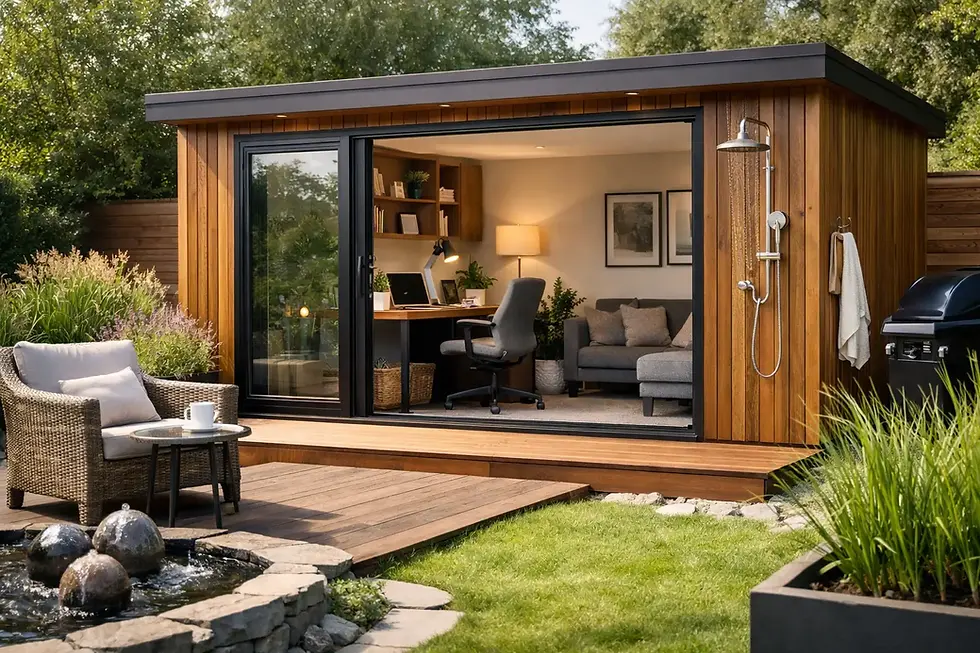
This is one of the most popular combinations because the uses complement each other. During the day, the room functions as a professional workspace with a fitted desk, strong Wi-Fi, good task lighting and acoustic control. In the evening, the same space becomes somewhere to switch off, with a comfortable armchair, shelving and softer layered lighting.
The key is zoning. A built-in desk on one wall keeps the work area contained, while a chair by glazing or a corner window seat gives the room a second identity. If the room is modest in size, bespoke joinery becomes especially valuable because it removes visual clutter and keeps storage integrated rather than improvised.
2. Gym and yoga studio
A private fitness space works best when it does not feel crammed with equipment. If you want a room that handles strength training as well as stretching or Pilates, layout matters more than floor area alone. You need clear circulation, impact-resistant flooring and enough wall space for storage so the room can be reset quickly between sessions.
Natural light is particularly helpful here, but so is privacy. Full-height glazing looks striking, though it may not be ideal if the room faces neighbouring properties. In many cases, carefully positioned windows, privacy glass or screening in the garden create a better balance. Thermal performance matters too, because a room used early in the morning or through winter needs to feel comfortable from the moment you step inside.
3. Cinema room and games den
This example suits households that want a social space without sacrificing the main house every weekend. A garden room can be designed with media walls, integrated speakers, blackout blinds and seating that works for both film nights and console gaming.
The trade-off is light. Large expanses of glazing can make a room feel open and premium, but they are not always ideal for screen use. A more tailored design with controlled natural light often performs better. If the room will be used by adults and children, durable finishes and hidden storage for games, accessories and soft furnishings make a noticeable difference to how tidy and inviting it feels.
4. Guest room and hobby space
Not every household needs a permanent guest bedroom, but many appreciate somewhere private for visiting family or friends. A garden room can handle occasional overnight stays while still serving as a hobby room for most of the year, whether that means painting, sewing, music practice or model making.
This is where furniture choice becomes important. A sofa bed or wall bed can work well if the proportions are right, but the room should not feel like a compromise in either mode. Good insulation, reliable heating and thoughtful lighting are essential if guests are to feel genuinely comfortable. It is also worth considering how close the room is to facilities in the house, because convenience shapes how often overnight use feels practical.
5. Family snug and garden bar
For homeowners who enjoy entertaining, this is often more useful than a formal garden building used only on special occasions. By day, it is a relaxed extra living space for reading, board games or a quiet coffee. By evening, it becomes a sociable bar and lounge with a drinks fridge, cabinetry and low lighting.
The success of this type of room often depends on how it connects to the garden. Sliding or bifold doors can help the room open up in warmer months, but the landscaping around it matters just as much. A terrace, pathway lighting and planting that softens the structure can make the room feel properly integrated rather than dropped into the garden as an afterthought.
6. Study space and teen hangout
As children get older, households often need a room that supports concentration without feeling overly formal. A garden room can provide a quiet place for revision, online tutoring and coursework, while also acting as a social space where teenagers can spend time with friends.
The balance here is durability and maturity. The room should not feel childish, because its role is likely to evolve quickly. Fitted desks, charging points, comfortable seating and practical storage create a room that remains useful as needs change. Acoustic insulation can also be worth prioritising, especially if the room is near neighbours or close to the house.
7. Creative studio and client meeting room
For people running a business from home, a garden room can solve two problems at once. It provides focused studio space for design, photography, consulting or treatment work, while also creating a polished setting for occasional client meetings.
This kind of dual use benefits from a slightly more considered entrance sequence. A clear path, exterior lighting and an interior layout that feels professional from the doorway all help. It may also need more storage than you first expect, particularly if materials, samples or equipment need to disappear quickly before a meeting begins. Bespoke design is particularly valuable here because the room has to support your workflow, not just look good in photographs.
8. Wellness room and garden office
This combination works well for homeowners who want work-life separation without building two separate spaces. One side of the room might hold a desk and storage for the working day, while the other supports recovery and downtime through a treatment couch, meditation corner or simple lounge area.
The room should feel calm in both modes, which usually means avoiding overfilling it. A restrained palette, natural textures and carefully planned lighting can carry the room from productive mornings to slower evenings. If the building fabric is high quality, with strong insulation and efficient construction methods such as SIP panels, the room will also be easier to keep comfortable year-round.
9. Pool room, changing space and summer lounge
For larger gardens, this is a strong example of a room that earns its place across different seasons. In summer, it acts as a base for outdoor living, with space to change, shower, relax and store towels or equipment. Outside peak months, it still works as a lounge, hobby room or general retreat.
The practical details matter here more than style alone. Moisture-resistant finishes, durable flooring and easy-clean surfaces will make the room far easier to live with. If the room is close to a pool or hot tub, good ventilation should be part of the specification from the outset.
What makes these multi purpose garden room examples successful
The common thread is not simply flexibility. It is deliberate design. A room becomes genuinely multi-purpose when each function has been accounted for early, rather than squeezed in later. That affects everything from footprint and glazing positions to heating, storage, lighting and the way the room sits within the garden.
A common mistake is designing for the most aspirational use and ignoring the everyday one. A room imagined as a glamorous entertainment space may end up being used mainly as a weekday office. Equally, a room designed too narrowly around work can feel flat and underused after hours. The strongest solution usually starts with your primary use, then builds in a secondary one that feels natural rather than forced.
It also helps to think in terms of transitions. How quickly can the room shift from office to lounge, or gym to guest space? If changing mode takes half an hour of moving furniture and finding cables, it will not happen often. Integrated storage, flexible lighting and furniture with more than one role make a significant difference.
Choosing the right approach for your home
The right answer depends on your garden, your house and your routines. A compact plot may need one carefully tailored room that performs several jobs elegantly. A larger site may allow for stronger zoning or a slightly more generous footprint. Planning considerations, access and proximity to boundaries can all shape what is possible, which is why early design guidance is so valuable.
For homeowners in Oxfordshire, a bespoke route often makes more sense than trying to adapt a standard building to a very specific brief. At Unique Garden Retreats, that is exactly where the conversation starts - with how you want the space to feel, function and fit into daily life, not with an off-the-shelf template.
The most useful garden room is rarely the one with the longest feature list. It is the one that suits your routines so well that, within a month, it feels as though it should always have been there.


Comments