


12 multi purpose garden room ideas
- Mark Moody
- Mar 30
- 6 min read
A garden room that only does one job can feel like a missed opportunity. The most successful multi purpose garden room ideas start with a simple question - how do you actually want to live in the space, not just how you want it to look on day one?
For many homeowners, that means creating a room that works hard from morning to evening. It might begin as a quiet office, become a workout space at lunch, and turn into a cinema room or family retreat at the weekend. When the design is handled properly from the start, one bespoke building can support all of that without feeling compromised.
What makes a garden room genuinely multi purpose?
A multi use space is not just a box with a sofa bed and a desk pushed into the corner. It needs proper planning, with layout, lighting, insulation, storage and power all considered together. If any one of those elements is treated as an afterthought, the room usually ends up favouring one use and underperforming for the others.
That is why the best approach is to think in layers. Start with the primary use, then add the secondary and occasional uses around it. A garden office that sometimes hosts overnight guests has very different priorities from a garden gym that also doubles as a teenage hangout. The structure may look similar from the outside, but the internal planning will be completely different.
Multi purpose garden room ideas that work in real homes
Office by day, snug by evening
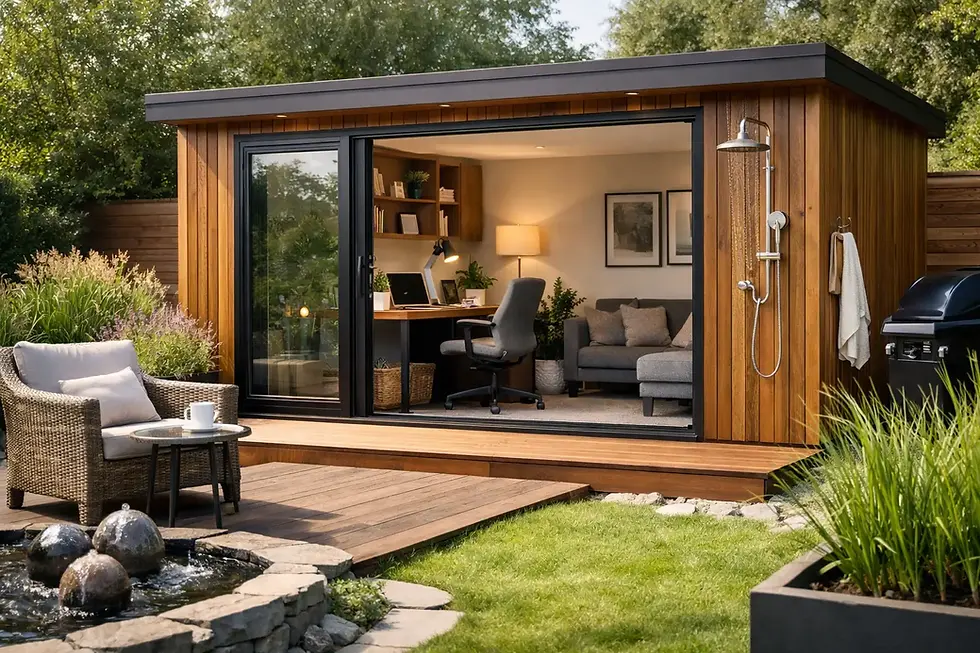
This is one of the most popular combinations because it suits how many people work now. During the day, you need a calm, professional environment with a fitted desk, strong broadband provision, good task lighting and enough acoustic separation from the house. In the evening, the same room can soften into a reading room, TV snug or somewhere to unwind.
The trick is avoiding furniture that shouts "office" when the working day is done. Built-in joinery helps, especially desks with integrated storage that keep cables, paperwork and screens out of sight. Warmer wall lighting, softer seating and layered finishes stop the room feeling corporate.
Home gym with wellness space
A garden gym does not have to be dominated by heavy equipment. Many homeowners want a space that supports weights or cardio, but also works for yoga, stretching or a quiet reset. That calls for durable flooring, strong ventilation, wall reinforcement if equipment is being fixed, and enough clear floor area to move freely.
This kind of room benefits from restraint. If you overfill it with machines, it loses flexibility. A cleaner layout with smart storage gives you room to change how you use it over time.
Cinema room and games room
If family life is driving the project, a cinema room that also functions as a games space can be a strong investment. This works particularly well in households where the main home is already busy and you want somewhere separate for film nights, gaming, or children having friends over.
Acoustics matter here more than many people expect. Insulation is not just about warmth - it also improves sound control and helps create a room that feels immersive. Lighting should be dimmable, and furniture needs to be arranged so the room still feels comfortable when no screen is in use.
Creative studio and guest room
A garden room can offer real value if it serves your hobbies and occasional hosting without asking for a full-time spare bedroom. Whether the studio use is painting, music, crafts or writing, the room should feel inspiring and practical first, with guest accommodation designed in a way that can disappear when not needed.
A wall bed, fitted cabinetry or bench seating with concealed storage can make this combination work well. It is one of the clearest examples of why bespoke design matters - off-the-shelf layouts rarely handle both functions gracefully.
Family room and entertaining space
Some homeowners are less interested in a specialist room and more interested in extra breathing space. A family-focused garden room can become the place for relaxed lunches, children doing homework, birthday gatherings or simply escaping the noise of the main house.
In this case, broad glazing, easy garden access and durable finishes tend to matter more than niche features. You want the room to feel connected to the outside and easy to live with. If entertaining is part of the plan, think early about lighting, heating and how people will move between the house, garden and room.
Garden office and meeting room
For professionals who regularly take calls or host clients, a garden office can do more than house a laptop. A slightly larger footprint allows for a dedicated working area plus a small seating zone for meetings, presentations or collaborative sessions.
This is where technical performance becomes especially important. Thermal efficiency, reliable electrics and year-round comfort are essential if the space is supporting your working life properly. A beautifully finished room still needs to perform on a cold January morning and during a hot spell in July.
Design choices that make flexibility easier
The success of multi purpose garden room ideas usually comes down to design decisions that are not obvious in the early sketches. Storage is one of the biggest. If every use of the room leaves equipment, paperwork or clutter on display, the space quickly starts to feel confused. Built-in storage keeps each function possible without making the room feel cramped.
Lighting is another. One central ceiling light rarely suits a space that shifts between work, relaxation and exercise. A better scheme combines practical task lighting with softer ambient options, so the atmosphere can change as the room changes.
Furniture should be chosen with the room's transitions in mind. Modular seating, fold-away desks, fitted joinery and dual-purpose pieces all help. That does not mean the room should feel temporary. In fact, the strongest results usually come from permanent, made-to-measure features that let the room adapt without constant rearranging.
Why the building specification matters
A multi purpose room asks more of the building itself than a simple summerhouse ever could. If the space is going to be used throughout the year for work, leisure or exercise, it needs proper insulation, structural integrity and a build quality that supports long-term use.
This is where construction methods make a difference. High-performance systems such as SIP panels can offer excellent thermal performance and strength, which helps create a room that is comfortable, energy efficient and durable. Those technical choices may not be the most visible part of the finished project, but they shape how the room feels every single day.
It is also worth thinking about glazing orientation, heating, ventilation and acoustic control from the start. A room with too much direct summer sun may overheat if shading is not considered. A room used for exercise or cinema nights needs different ventilation and sound planning from one used mostly for quiet desk work. Good design is never one-size-fits-all.
Planning around your plot, not just the room
The best garden rooms do not feel dropped into a spare corner. They relate well to the house, the garden and the way you move through both. A multi purpose building should be easy to reach in winter, feel private enough for focused use, and still sit naturally within the landscape.
That is why the surrounding works matter too. Pathways, planting, screening, exterior lighting and the restoration of the garden after construction all contribute to the final result. A premium room deserves an equally thoughtful setting.
For homeowners in Oxfordshire, this often means balancing visual appeal with practical use in gardens that vary widely in shape, access and character. A bespoke process allows the design to respond to those realities rather than forcing the site to fit a standard model. That is central to the way Unique Garden Retreats approaches each project.
How to choose the right combination for your lifestyle
Before settling on one of these multi purpose garden room ideas, think less about trends and more about your weekly routine. Who will use the room most often? What needs to happen there every day, and what only happens occasionally? Which functions need privacy, and which can overlap comfortably?
Being honest at this stage helps avoid common mistakes. If work is the main use, protect that first. If fitness is the priority, make sure the room still feels practical as a gym even when softer uses are added in. The strongest multi purpose spaces are not trying to be everything at once - they are carefully prioritised, then thoughtfully layered.
A well-designed garden room should make life easier, not ask you to compromise every time you step inside. When the space is tailored around how you live, work and relax, it becomes far more than an extra room at the bottom of the garden. It becomes one of the most useful parts of your home.


Comments