


10 Garden Room Landscaping Ideas
- Mark Moody
- Apr 26
- 6 min read
A well-built garden room should never look as though it has simply been placed at the end of the lawn and left there. The best garden room landscaping ideas make the building feel settled, practical and properly connected to the rest of the garden. That matters just as much for a home office in Oxfordshire as it does for a gym, studio or cinema room.
Landscaping is often what turns a finished structure into a space that feels intentional. It improves access in winter, softens the edges of the build, helps with privacy and can even solve practical issues such as drainage and uneven ground. When it is considered early, not treated as an afterthought, the result is cleaner, more comfortable and far better looking.
Start with how the garden room will be used
Before choosing paving, plants or screens, it helps to step back and look at the purpose of the room. A garden office usually benefits from a clear, direct route from the house, subtle planting and enough hard landscaping to keep shoes clean on wet mornings. A garden gym often suits tougher surfaces, simple borders and space around the entrance for ventilation and easy movement. A cinema room or relaxation space may call for a more enclosed feel, with layered planting and softer lighting.
This is where many landscaping decisions either work brilliantly or miss the mark. A design that looks beautiful in photographs may not suit daily use. If you are carrying laptops and coffee across the garden, a stepping-stone path through bark mulch will quickly lose its appeal. If the room is mainly for evening use, lighting and privacy should move much higher up the priority list.
Garden room landscaping ideas that improve the whole plot
The strongest schemes do more than frame the building. They improve the wider garden, helping the room feel integrated rather than separate.
1. Create a proper path, not an afterthought
A defined path is one of the simplest and most effective upgrades. It gives the garden room presence and makes the journey to it feel deliberate. Porcelain paving, natural stone and good-quality gravel can all work well, but the right choice depends on the style of the building and how much maintenance you want.
For a premium garden room, the path should usually feel in keeping with the architecture. Clean-lined paving tends to suit contemporary rooms, while softer stone or gravel can work well with more traditional settings. Width matters too. A path that is too narrow can make even a generous garden feel cramped.
2. Use planting to soften the base of the building
Most garden rooms benefit from planting around at least one or two sides. This helps settle the structure into the garden and reduces the visual contrast between the building and the ground around it. Low grasses, evergreen shrubs and flowering perennials can all work, depending on the look you want.
There is a balance to strike here. Plant too heavily against the walls and the room can feel boxed in, while airflow and maintenance access may become awkward. Leave too much bare edging and the building can look exposed. Usually, a restrained planted border is enough to soften the lines without overwhelming them.
3. Build in privacy from the start
Privacy is one of the most common reasons people invest in a garden room, yet it is often undermined by open sightlines from neighbouring homes. Clever landscaping can fix that without making the space feel closed off.
Slatted screening, pleached trees and layered planting are often more elegant than a tall, solid fence. They give privacy while still allowing light and movement. This matters particularly if your garden room includes large areas of glazing. You want the benefit of natural light, but not the feeling of being on display.
4. Add a small terrace or transition space
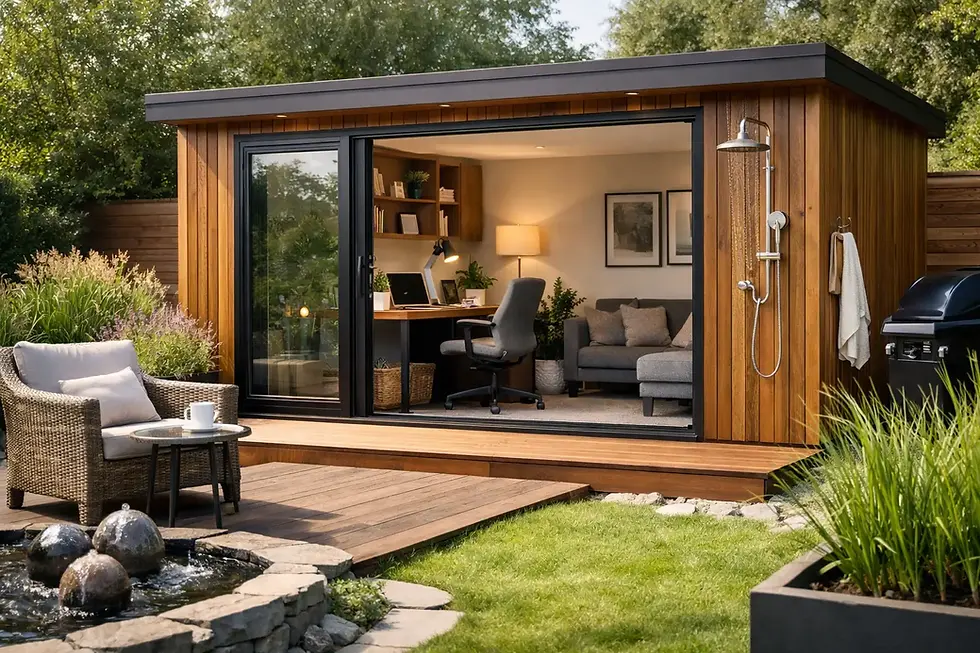
A garden room feels more generous when there is a little breathing space outside the door. Even a modest paved terrace or decked area can create a useful threshold between indoors and outdoors. It gives you somewhere to pause, place planters or add seating, and it makes the room feel less abrupt in the garden.
This can be especially effective for multi-use rooms. A home office with a small terrace feels more relaxed and usable through the day. A gym benefits from a practical area for cooling down or setting equipment down. The key is scale. It should complement the building, not dominate the plot.
Think about levels, drainage and year-round use
Some of the best garden room landscaping ideas are not the most visible. They are the ones that quietly make the space easier to use in every season.
5. Solve drainage before it becomes a problem
In many gardens, especially where the ground is heavy or uneven, poor drainage can spoil the finish around a garden room very quickly. Puddling near the entrance, waterlogged borders and splashing mud all make the space feel less polished.
Good landscaping design should direct water away from the building and prevent surfaces from becoming slippery or saturated. That might mean adjusting ground levels, choosing permeable materials or introducing discreet drainage solutions. It is not the glamorous part of the project, but it protects both the appearance and usability of the space.
6. Work with the natural levels of the garden
A sloping site is not a drawback if it is handled properly. In fact, level changes can make the setting feel more bespoke and considered. Retaining edges, raised beds and split-level paths can all help a garden room sit naturally within the plot.
Trying to force every garden into a flat layout can look awkward and add unnecessary cost. Often, the better solution is to work with the site and use landscaping to make those changes feel intentional.
Choose materials that match the build quality
A beautifully finished garden room can be let down by cheap or mismatched landscaping. The materials around it do not need to be extravagant, but they should feel coherent.
7. Repeat tones and textures from the building
If the room uses timber cladding, black detailing or a crisp rendered finish, the landscaping should pick up on those cues. That might mean warm stone with timber, darker edging with aluminium frames or planting that complements a clean architectural style.
Consistency makes a big difference. It is one of the reasons bespoke schemes feel calmer and more expensive. Nothing is competing for attention.
8. Keep low-maintenance in mind
Many homeowners want a garden room to simplify life, not add another area that needs constant upkeep. That does not mean the landscaping must be minimal, but it should be realistic.
Hardwearing paving, evergreen structure and sensible planting choices usually offer the best return. Gravel can look smart, but it may travel if used heavily near entrances. Timber decking can be attractive, but it will need care over time. There is no single right answer - it depends on your priorities, the style of your garden and how hands-on you want to be.
Use lighting to make the space usable after dark
Lighting is frequently overlooked until the end, yet it has a huge effect on how a garden room feels. Without it, even the best-built room can seem isolated once daylight fades.
9. Layer practical and atmospheric lighting
A single bright light near the door will cover the basics, but it rarely creates a welcoming finish. A better approach is to combine functional path lighting, subtle planting illumination and gentle lighting around the entrance or terrace.
This is particularly useful for garden offices in winter, when people may start and finish work in low light. It also improves safety and helps the room feel like a natural part of the home rather than a detached outbuilding.
Don’t ignore the view from inside the room
Landscaping is not only about how the garden room looks from the house. It is also about what you see when you are inside it.
10. Frame the outlook from the glazing
Large windows and doors are one of the biggest advantages of a bespoke garden room, so the view deserves careful thought. Rather than facing a blank fence or an empty patch of lawn, it is worth creating focal points. A specimen tree, structured planting bed, water bowl or simple seating area can all give the eye somewhere to land.
This is especially valuable in workspaces. A considered outlook can make the room feel calmer and more restorative, which is one of the reasons people choose to work in the garden in the first place.
Why early planning makes a better result
The most successful projects treat the building and landscaping as one joined-up design. When this happens, access routes, finished floor levels, planting areas, drainage and lighting can all be planned together. The result is more efficient, more attractive and usually more cost-effective than retrofitting the garden afterwards.
That joined-up approach is also what helps reduce disruption. Rather than finishing the room and then trying to repair the damage left around it, the surrounding garden is restored and improved as part of the same process. For clients investing in a bespoke space, that continuity matters.
At Unique Garden Retreats, this is often where the project moves from good to genuinely complete. A custom garden room deserves a setting that feels equally well resolved.
The right landscaping will not shout for attention. It will simply make the whole space feel settled, useful and beautifully finished every time you step outside.


Comments