

Garden Room Heating Systems Review
- Mark Moody
- Jun 3
- 6 min read
A garden room that looks beautiful in July but feels chilly by November quickly becomes an expensive spare room. That is why any garden room heating systems review needs to start with real use, not brochure claims. The right system depends on how often you use the space, how well it is insulated, how quickly you want it to warm up, and what you are willing to spend both upfront and over time.
For most homeowners, heating is not a standalone decision. It affects flooring choices, wall layout, furniture placement and the overall feel of the room. A garden office used every weekday has very different demands from a cinema room used a few evenings a week, and a home gym brings its own considerations again. A good heating choice should support the way you actually live, not force compromises later.
Garden room heating systems review - what matters most
The biggest mistake people make is choosing a heater before considering the building fabric. In a well-designed, properly insulated garden room, heating demand is far lower and the choice of system becomes much more flexible. In a poorly insulated structure, even the best heater can feel wasteful.
That is why thermal performance matters so much. High-quality insulation, airtight construction, suitable glazing and solid installation standards all influence comfort just as much as the heating appliance itself. In practical terms, a premium bespoke build gives you more efficient heating options because the room retains warmth properly.
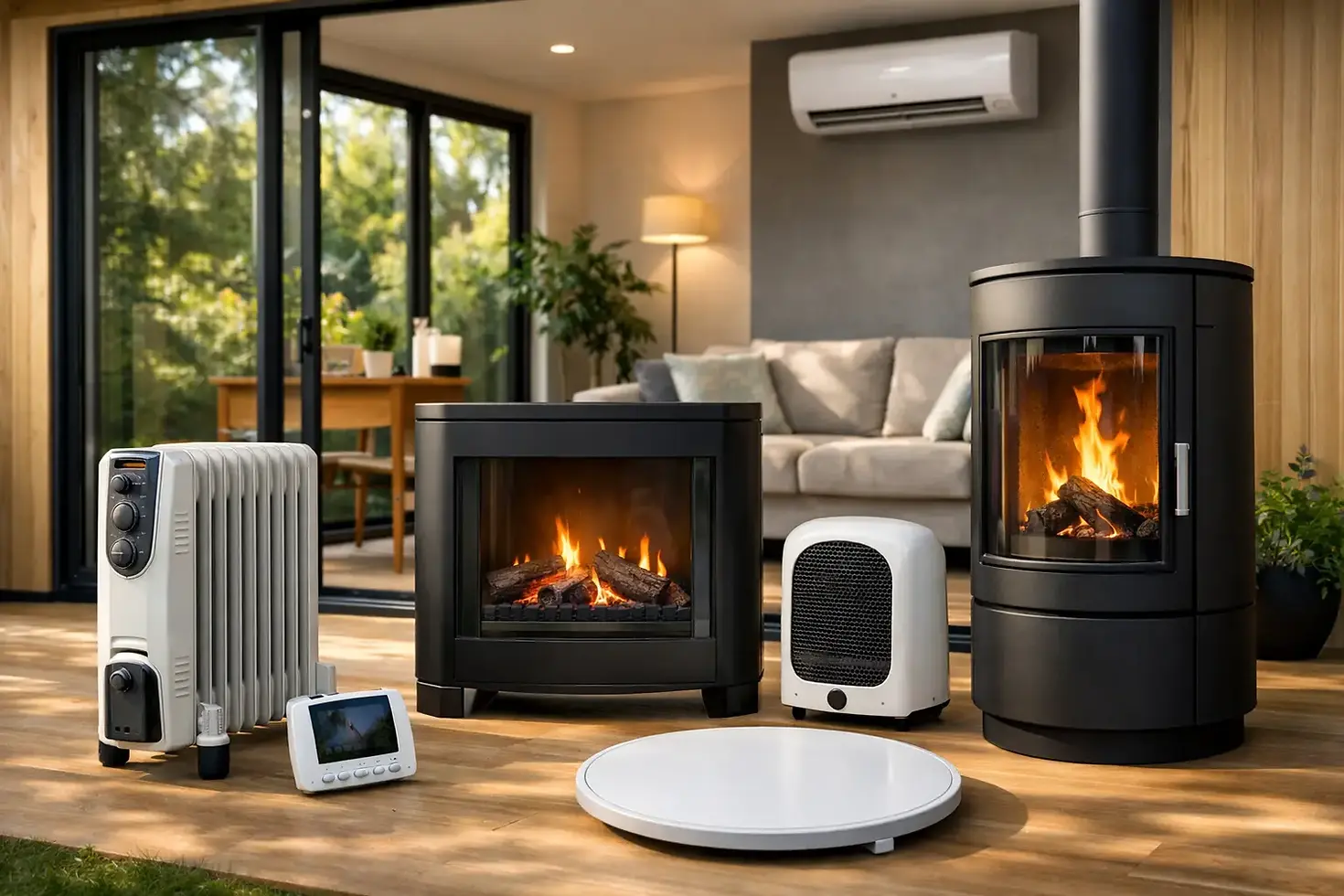
Once that foundation is in place, most homeowners are comparing four realistic options - electric panel heaters, electric underfloor heating, infrared panels and air conditioning units with heating capability. Each has strengths, and each suits certain types of garden room better than others.
Electric panel heaters
Electric panel heaters are often the simplest and most familiar option. They are relatively affordable to install, easy to control, and can heat a room quickly enough for day-to-day use. For a garden office or occasional hobby room, they are often a sensible starting point.
Their main advantage is practicality. They do not require major floor build-up, they are straightforward to position, and modern models can be paired with thermostats and smart controls. If you want dependable background warmth without overcomplicating the build, they do the job well.
The trade-off is that they are visible, and wall space matters in garden rooms. If your room will include built-in storage, full-height glazing or a media wall, heater placement can become awkward. Running costs also depend heavily on electricity prices and how often the space is used. In a room used all day, every day, there may be more efficient or more comfortable long-term choices.
Electric underfloor heating
Underfloor heating has clear appeal in a bespoke garden room. It keeps walls free, creates an even spread of warmth and feels particularly comfortable underfoot during colder months. In spaces where design matters as much as function, that clean finish is a major plus.
It works especially well in garden rooms used as offices, treatment rooms, studios or lounges, where steady background heat is more important than a rapid blast of warmth. If the building is well insulated, underfloor heating can maintain a very comfortable temperature without dominating the room.
There are, however, practical points to consider. It can be slower to warm up than a wall-mounted heater, so it is best suited to spaces with more regular use rather than very occasional short visits. Running costs can also be higher than some people expect if the room is kept heated continuously. The choice of floor finish matters too, as some materials transfer heat more effectively than others.
For clients planning a fully tailored space, underfloor heating often makes most sense when it is designed in from the start, rather than added later as an afterthought.
Infrared heating panels
Infrared panels divide opinion, but they can be an excellent fit in the right garden room. Rather than heating the air in the traditional sense, they warm surfaces and people directly. That can make them feel responsive and efficient, particularly in spaces used for shorter periods.
They are slim, discreet and often ceiling-mounted, which helps preserve wall space. In a garden office with limited room for equipment, shelving or glazing, that can be a real advantage. They also suit minimalist interiors where visual clutter is best avoided.
The key question is user expectation. Infrared heat feels different from the all-around warmth of underfloor heating or a panel radiator. Some people like its immediacy; others prefer a more conventional feel. Layout matters too, because where the panels are positioned affects how evenly the space feels heated. This is one of those systems where good design input makes a noticeable difference.
Air conditioning with heating
For homeowners who want year-round temperature control, a modern air conditioning unit with heat pump function can be a strong option. It offers both cooling in summer and heating in winter, which is particularly useful in glazed garden rooms, south-facing offices and home gyms where temperature swings can be more noticeable.
Its biggest strength is flexibility. It can warm a room quickly, cool it effectively, and often run efficiently compared with direct electric resistance heating. For a multi-use room or one used throughout the year, that versatility is attractive.
The compromises are mostly aesthetic and acoustic. Some clients do not want a visible wall unit in an otherwise carefully designed interior, and while many systems are quiet, sensitivity to sound varies from person to person. Installation is also more involved than a simple electric heater, so it needs to be planned properly.
Still, when clients want one system that handles both winter comfort and summer overheating, this is often the most rounded solution.
Which system suits each type of garden room?
A garden office usually benefits from stable, controllable heat that is economical over regular use. Underfloor heating or an efficient air conditioning unit often works well here, depending on the room design and how many hours it will be occupied.
A home gym is different. People exercising generate heat quickly, so overheating can become more of an issue than cold. In that setting, a system that can cool as well as heat is often more practical than underfloor heating alone.
For a cinema room or snug, comfort and atmosphere tend to lead the decision. Underfloor heating can create a premium feel, while infrared or panel heaters may suit rooms used only at specific times. A hobby room or occasional guest space may not justify the upfront cost of a more integrated system, so a quality electric panel heater can be the most sensible answer.
This is where bespoke design matters. The best heating choice is not always the most expensive or the most technically advanced. It is the one that fits the room's purpose, layout and level of use.
Installation, insulation and long-term value
In any honest garden room heating systems review, installation quality deserves as much attention as the heating system itself. A poorly installed heater in a well-built room can be fixed. A badly designed room with weak thermal performance is harder and more expensive to put right.
That is why it pays to think about heating early in the project. Floor levels, electrical provision, glazing specification and furniture layout all influence what will work best. If you leave the decision until the end, options can narrow quickly.
This is also where a company with strong technical understanding adds value. At Unique Garden Retreats, the focus on bespoke design and thermal performance means heating is considered as part of the whole build, not bolted on at the end. For homeowners investing in a premium outdoor space, that joined-up approach usually leads to better comfort and fewer compromises.
So, what is the best option?
If you want a simple answer, there is not one system that wins for every garden room. Electric panel heaters remain a practical, cost-effective choice for many occasional-use spaces. Underfloor heating offers the cleanest finish and a very comfortable feel for regularly used rooms. Infrared panels can be excellent where space-saving and quick response matter. Air conditioning with heating is often the most versatile for year-round use, especially where summer comfort is just as important as winter warmth.
The better question is this: how do you want the room to feel in January, and how often will you really use it? Once that is clear, the right heating choice usually becomes much easier.
A garden room should feel like part of your home, not a seasonal extra you drift in and out of. Get the heating right at the design stage, and the space earns its place every month of the year.


Comments