


Garden Office vs Spare Room: Which Works?
- Mark Moody
- Jun 5
- 6 min read
By the third video call of the morning, most people know whether their current setup is working. If you are weighing up a garden office vs spare room, the real question is not simply where you can put a desk. It is which option gives you the space, focus and flexibility to work well now, while still making sense for your home in the long term.
For some households, a spare room is the obvious answer. It is already there, it feels cost-effective, and it can be ready quickly. For others, that same room becomes a compromise almost immediately - half office, half storage cupboard, with laundry baskets just out of shot. A garden office asks for more planning and investment, but it often solves problems a converted bedroom never quite can.
Garden office vs spare room: what really changes day to day?
The biggest difference is separation. A spare room keeps work inside the house, which can be convenient, especially if you need to stay close to children, deliveries or general family life. You can make a coffee in your own kitchen, pop upstairs between meetings and avoid stepping outside in poor weather. On paper, it is the easy choice.
Yet convenience is not always the same as productivity. Many homeowners find that a spare room still feels too connected to the rest of the house. Noise travels. Interruptions happen. The line between working hours and home life gets blurred because you are never truly away from either.
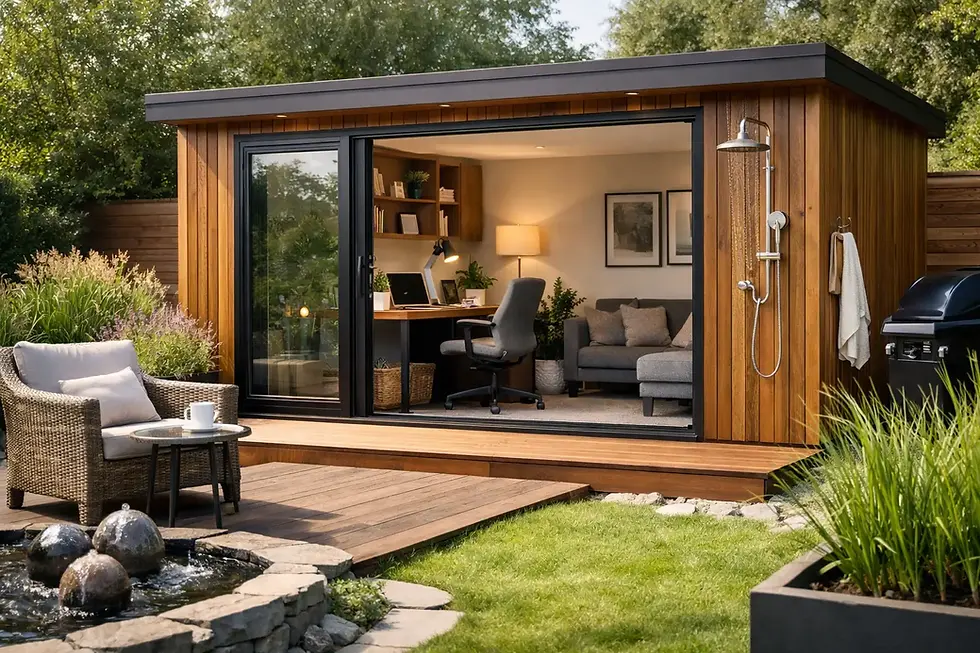
A garden office creates a clearer boundary. Even a short walk across the garden changes your mindset. You leave the house, step into a workspace designed for one purpose, and close the door on the distractions behind you. That physical separation can make a significant difference to concentration, routine and work-life balance.
This is often the point people underestimate. The value of a garden room is not just the floor area. It is the feeling of having a dedicated place that supports the way you want to work.
When a spare room makes good sense
A spare room is not the wrong choice. In some homes, it is the most sensible one.
If you work from home occasionally rather than full time, a spare bedroom or box room may be perfectly adequate. The same applies if your work is quiet, screen-based and does not require client visits, specialist equipment or long stretches of deep focus. With the right desk, lighting, storage and broadband setup, a room indoors can be comfortable and practical.
Budget also matters. Adapting an existing room is usually cheaper than building a new structure in the garden. If your priority is to create a functioning office quickly, making use of existing space can be an efficient first step.
There is also the question of plot size. Not every garden can comfortably accommodate a separate building without compromising usable outdoor space. In smaller properties, a well-planned room inside the house may simply fit better.
The trade-off is that the room often has to keep serving more than one purpose. Guests still need somewhere to stay. Storage still needs a home. As family life changes, the office may be the first thing to be squeezed.
Where a garden office comes into its own
A garden office tends to suit people who work from home regularly and want a solution that feels permanent rather than improvised.
If your career depends on focus, confidentiality or presenting professionally on calls, a purpose-built space can be a genuine upgrade. It gives you control over layout, acoustics, lighting, heating and storage from the outset, rather than trying to adapt a room that was designed for something else.
It also allows the main house to remain just that - a home. Bedrooms stay as bedrooms. Shared spaces do not have to absorb office furniture, filing cabinets or printers. That matters more than many people expect, especially in busy family households.
For clients in Oxfordshire looking for a premium finish, bespoke design is often the deciding factor. A custom garden room can be tailored around the exact way you work, whether that means integrated joinery, full-height glazing, strong insulation, year-round thermal comfort or enough flexibility to use the space for something else later on. That future use matters because today’s office could become tomorrow’s studio, gym or quiet retreat.
Cost is not just about the first invoice
When comparing a garden office vs spare room, it is easy to focus only on upfront cost. A spare room usually wins that comparison. There is less building work, fewer decisions and a lower initial outlay.
But the true cost can be broader than that. If using a spare room means losing guest accommodation, reducing storage or making the rest of the house feel more cramped, there is a practical cost to everyday living. If your work suffers because the space is noisy or distracting, that cost may be less visible but still real.
A garden office requires more investment, but it also creates new usable space rather than repurposing existing space. For many homeowners, that distinction is crucial. You are not shifting pressure around the house. You are adding a dedicated, high-performing room to the property.
There can also be a long-term value argument. While no one should build solely for resale, a well-designed garden room can make a property more attractive because it adds flexible lifestyle space. The quality of design and construction matters here. A bespoke building with strong thermal performance, durable materials and a finish that complements the home will always stand apart from a basic off-the-shelf unit.
Comfort, insulation and year-round use
This is where specifications matter. A spare room benefits from being within the envelope of the house, so it will often already feel comfortable throughout the year. Heating, electrics and internet are usually straightforward to extend or adapt.
A garden office needs to be built properly if it is to perform like a serious workspace rather than a summer-only outbuilding. Good insulation, quality doors and windows, sound structure and efficient heating all play a part. This is why build method matters so much. Systems such as SIP panels are often valued because they help create excellent thermal performance and structural strength in a relatively slim wall build-up, making the room efficient and comfortable across the seasons.
The result should not feel like a shed with a desk in it. It should feel like a true extension of the way you live and work.
Planning, practicality and the build process
A spare room is naturally simpler. There is little disruption and very little lead time beyond decorating and furnishing.
A garden office involves more moving parts. Depending on size, position and specification, planning considerations may apply. Groundworks, access, electrics, interior finishes and garden reinstatement all need careful thought. That can sound daunting, but it becomes much easier when the project is managed as a complete service rather than a collection of separate trades.
This is one area where experience really pays off. A well-run project should guide you through design choices, room positioning, technical details and the finishing touches that help the building sit naturally within the garden. At Unique Garden Retreats, that full process is part of making the final result feel considered rather than pieced together.
Which choice is better for your home?
There is no universal winner. A spare room is often the right answer when budget is tight, space inside the house is genuinely available and your work setup is fairly light-touch. It can be quick, practical and entirely sufficient.
A garden office becomes the stronger option when working from home is a central part of your life and you want a space designed around that reality. It offers better separation, protects the function of your home and gives you a room with longer-term flexibility.
The most useful question is not which option is cheaper or easier in the short term. It is which one will still feel right in two or three years. If you are already frustrated by working in the house, a spare room may only tidy up the problem. A bespoke garden office, by contrast, can solve it properly.
The best workspace is the one that supports your routine without asking the rest of your home to compromise around it.


Comments